


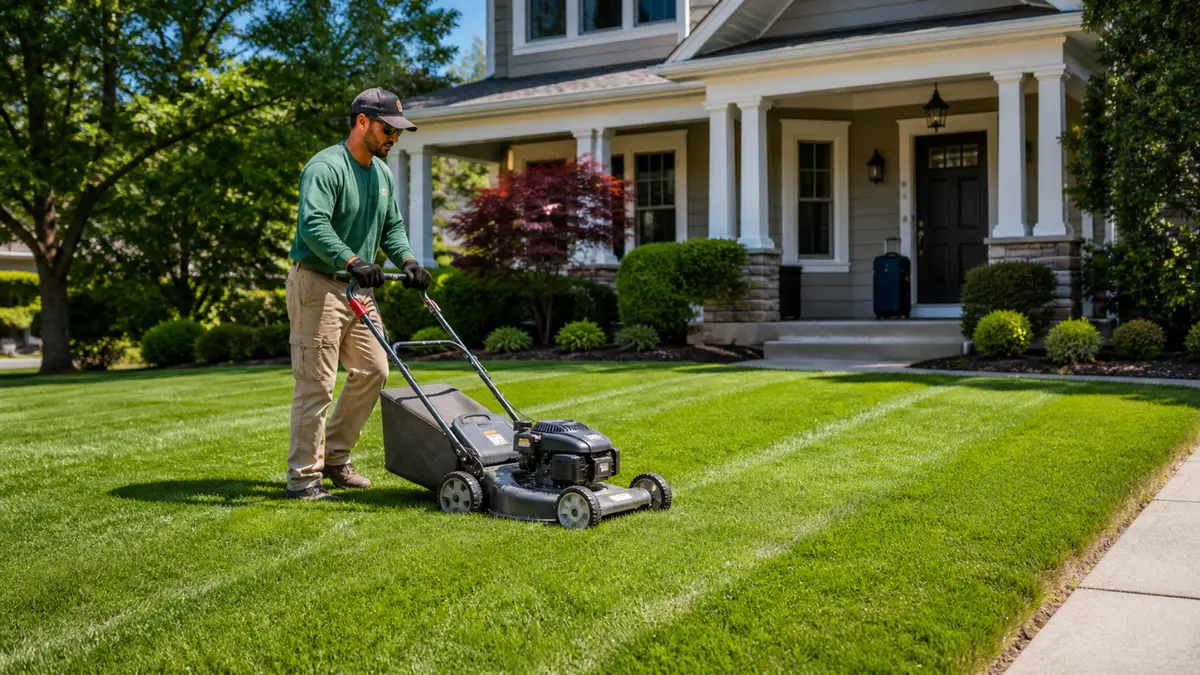
Why You Should Hire Someone to Mow Your Lawn While on Vacation
Skipping lawn care for a week or two might seem harmless, but it creates real financial, legal, and security exposure. An overgrown lawn during an absence can trigger HOA fines, damage your turf, and signal to potential burglars that the house is empty. At GreenPal, we've helped over 1 million homeowners arrange reliable lawn care, and vacation coverage is one of the most common reasons people first try a lawn care platform. Here's what's actually at stake.
What Two Weeks Without Mowing Does to Your Lawn
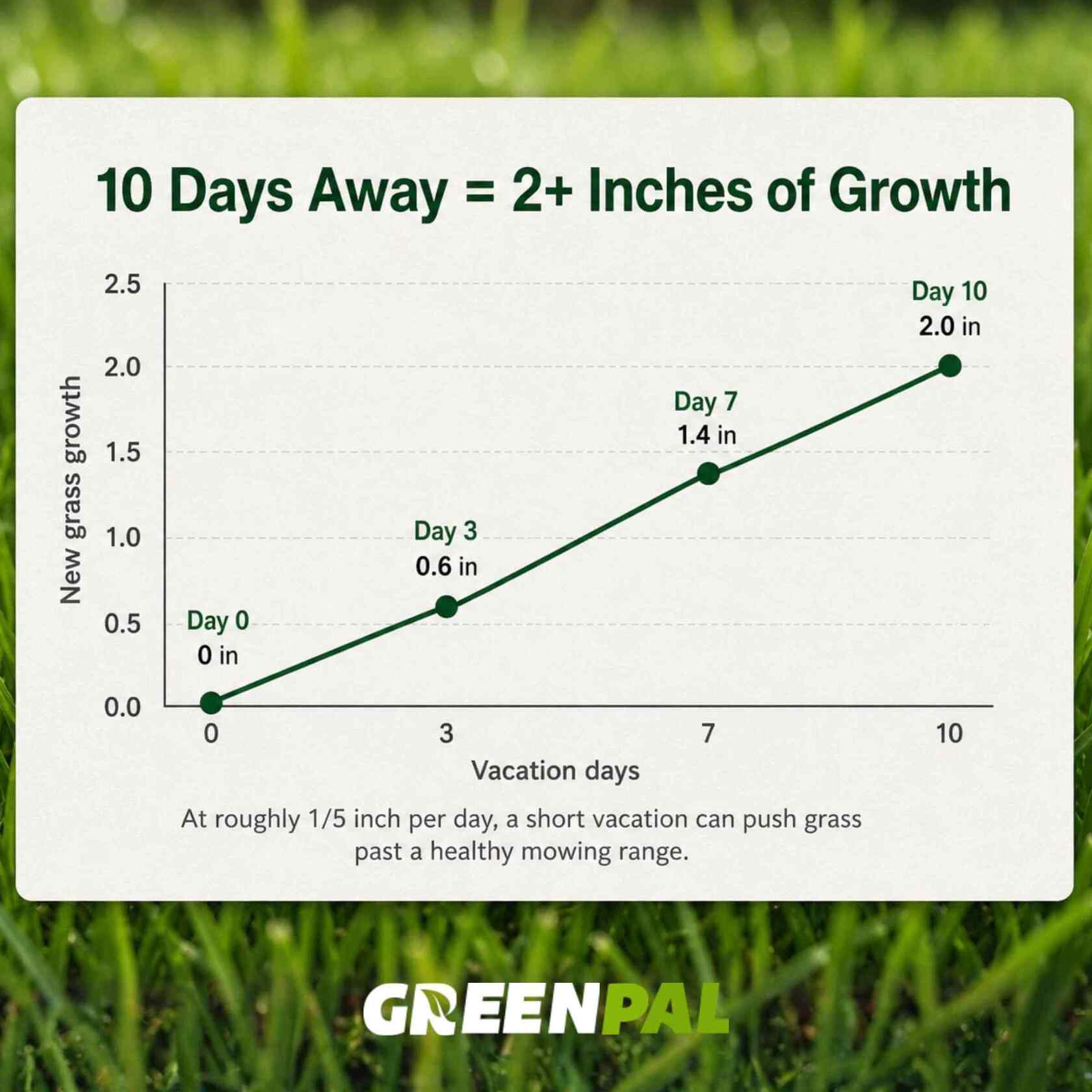
During peak growing season, grass grows at roughly 1/5 inch per day. Over a 10-day vacation, your lawn can gain two or more inches, enough to push it past the height limits set by most HOAs and municipalities.
The bigger problem comes when you get back. Most homeowners try to cut everything down to normal height in a single pass. This violates the one-third rule, which the University of Illinois Extension defines as never removing more than 33% of the grass blade in one mowing session. Cutting overgrown grass all the way back forces the plant to deplete its energy reserves to regrow, leaving it stressed and more vulnerable to drought and disease. Tall grass also traps moisture near the soil surface, which creates conditions for fungal problems.
Warm-season grasses like Bermuda and St. Augustine can grow even faster during their peak season, so two weeks without a mow can be particularly damaging in warmer climates.
If you come home to an overgrown lawn, our guide on how to mow tall grass walks through how to bring it back safely.
HOA Fines and Municipal Code Violations
For homeowners in HOA neighborhoods, an unmanaged lawn during vacation is a fast path to fines. Most associations set a maximum grass height of 6 inches. Once exceeded, the HOA can issue daily fines ranging from $50 to $1,000 per violation. Unpaid fines can escalate to a lien on the property.
One of the more expensive outcomes: many HOAs have the authority to send their own contractor to mow your lawn and bill you at rates that are typically five times the normal market rate.
Municipal codes carry similar penalties. Some examples from common violation standards:
Jurisdiction |
Height Limit |
Enforcement |
Peoria, AZ |
6 inches |
Code compliance citation |
Mesa, AZ |
9 inches |
Deterioration/blight violation |
Port St. Lucie, FL |
12 inches |
Neighborhood Services violation |
Standard HOA |
6 inches |
Fines, liens, foreclosure |
Code enforcement officers conduct regular patrols in many cities. Violations that accumulate while you're away can become a substantial bill before you're even home.
An Overgrown Lawn Signals Vacancy
This is the risk most homeowners don't think about until after the fact. In residential security, visible signs of neglect are a recognized indicator of vacancy.
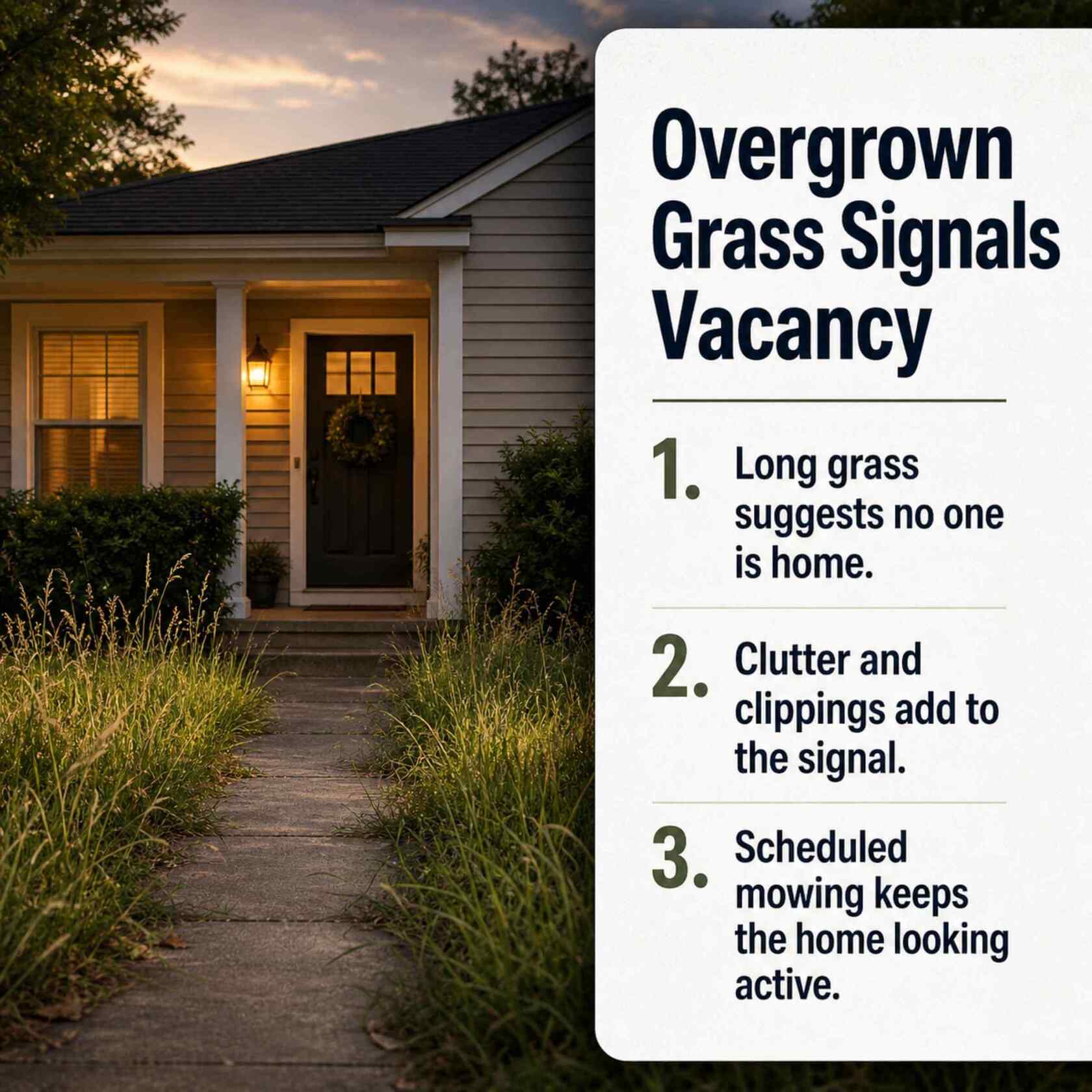
An unkempt lawn in an otherwise well-maintained neighborhood effectively announces that the owner is away.
Research into residential burglary prevention shows that burglars actively monitor properties for these signals. A lawn that goes from maintained to overgrown over the course of a week, in a neighborhood where everything else stays tidy, is a clear sign of absence.
Scheduled professional visits disrupt this. A crew arriving on a regular schedule creates the impression that the home is being actively monitored, which is a meaningful deterrent. Crime prevention guidelines from the Lexington, MA Police Department also recommend:
Keeping shrubs trimmed below 3 feet to eliminate hiding spots near windows and entryways
Maintaining tree branches at least 7 feet from the ground for clear sightlines
Eliminating any accumulation (clippings, debris, long grass) that suggests no one is home
Pairing professional lawn service with other standard measures, like light timers, mail holds, and informing a neighbor, gives your property the best chance of looking occupied while you're gone.
Curb Appeal and Property Value

Beyond security and compliance, there's a direct financial argument. Research from the University of Texas at Arlington found that a home's exterior condition can account for up to 7% of its total market value, a figure we covered in our curb appeal analysis. In cold housing markets, that figure climbs to 14%. On a $350,000 home, the 7% scenario represents roughly $24,500 in perceived value.
A survey of 350 realtors found that 97.7% believe professional lawn care is a decisive factor in both sale price and time on market. More than half said quality landscaping could improve value by 15% or more.
This matters most if your home is listed for sale or refinancing during your absence. An unmanaged lawn during that window can create a real, if temporary, valuation gap.
The Cost of Waiting Until You Get Back
Some homeowners skip vacation mowing with the plan to handle it when they return. The problem is that an overgrown lawn often costs more to restore than it would have to maintain.
Most lawn care professionals apply a surcharge for reclamation mowing on grass taller than 6 to 10 inches, due to the added time, fuel, and wear on equipment. That surcharge can sometimes double the standard rate for a single visit.
Professional mowing costs between $30 and $85 per visit for most residential properties, with a national average around $50. Here's how that compares to the alternatives:
Scenario |
Estimated Cost |
Scheduled mow during vacation |
$30-$85 (avg. ~$50) |
Reclamation mow after overgrowth |
Often double the standard rate |
HOA-dispatched contractor |
$150-$300+ |
HOA daily fine (per violation) |
$50-$1,000 |
One scheduled mow during a two-week trip costs less than the cheapest potential fine in most jurisdictions.
What to Look for When Hiring Vacation Lawn Care
Whenever possible, schedule a trial mow before you leave. Running the service one week before departure lets you assess how the provider handles your property's specific layout, gate access, and any obstacles like garden beds or furniture.
Before you depart, confirm:
The provider carries their own liability insurance
There is a way to verify the job was completed remotely (photo documentation)
The service can convert to a recurring schedule if you want to continue after the trip
The provider has access to all areas of the yard (gate codes, a contact if access is blocked)
Also, remove yard toys, loose debris, and any outdoor valuables before leaving. This reduces the risk of equipment damage and eliminates the clutter that signals an unattended property.
How GreenPal Handles Vacation Mowing
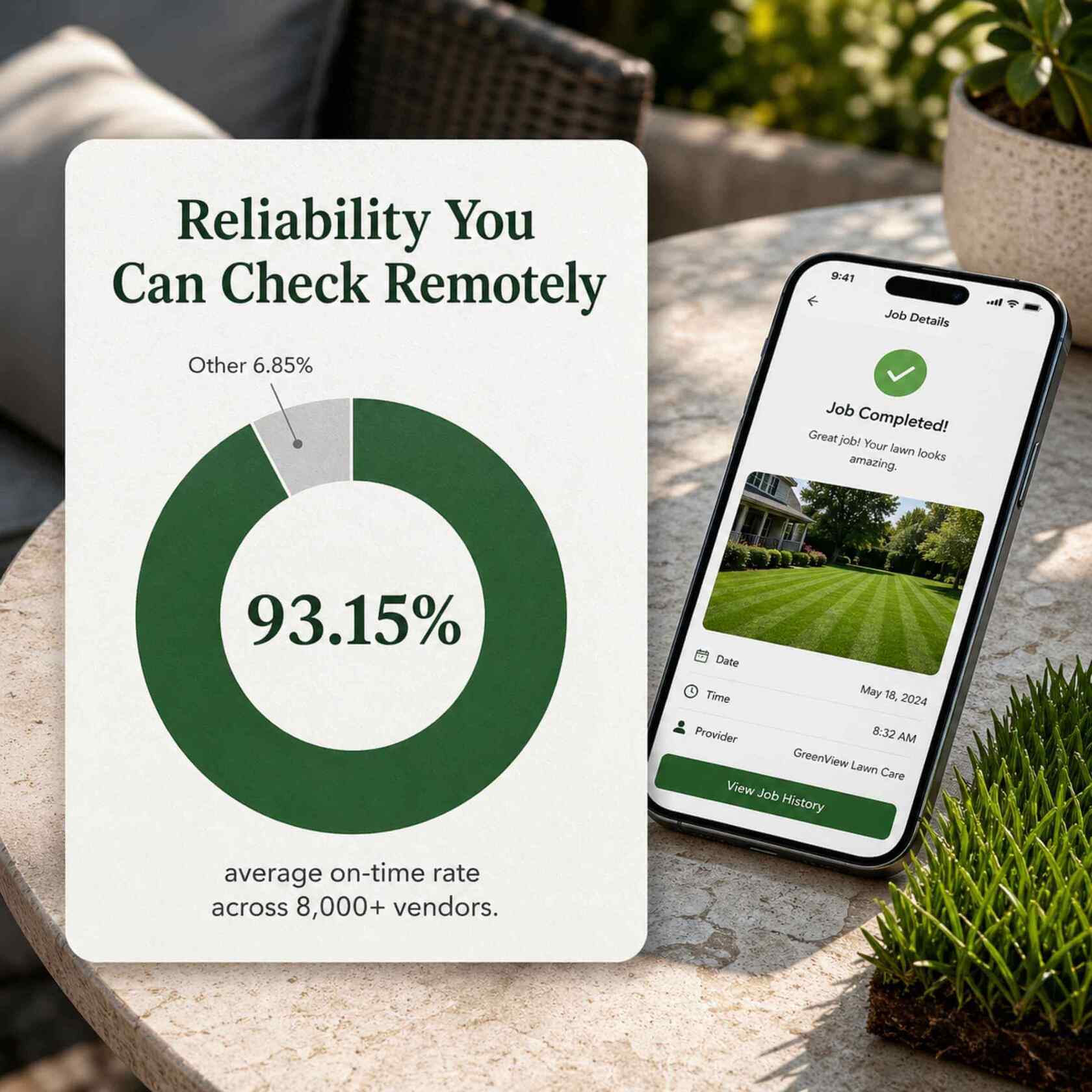
For homeowners who want accountability without the coordination overhead, GreenPal is built for exactly this scenario. Every provider on the platform goes through equipment inspection, customer reference verification, business credit screening, and identity verification before they can take jobs.
Our 2025 Vendor Reliability Index, which analyzed more than 8,000 vendors, found an average on-time rate of 93.15%. That's a concrete, data-backed number you can filter by when selecting a provider, not just star ratings.
Before payment is released, every vendor is required to upload GPS-tagged, time-stamped photos of the completed job. From anywhere in the world, you can open the app and see that your lawn was mowed, confirm when it happened, and have documentation ready if you need to respond to an HOA warning. Payment runs through a PCI Level 1 secure system via Stripe, and funds are only released after photo proof is submitted.
You can also convert a one-time vacation mow into a recurring weekly or bi-weekly schedule directly in the app. Many homeowners use vacation coverage as the starting point for regular lawn service that they continue long after they're home.
See how GreenPal works, or search for lawn care near you to get quotes before your trip.
Ready to have your lawn covered while you travel? Get started on GreenPal to compare quotes from vetted, insured professionals in your area before you leave.


