Table of Contents:
|
What Do Sod Webworms Look Like? Does Your Lawn Need Treatment? Control Methods for Sod Webworms How to Recover the Lawn From Sod Webworm Damage |
How to Get Rid of Sod Webworms in Your Lawn
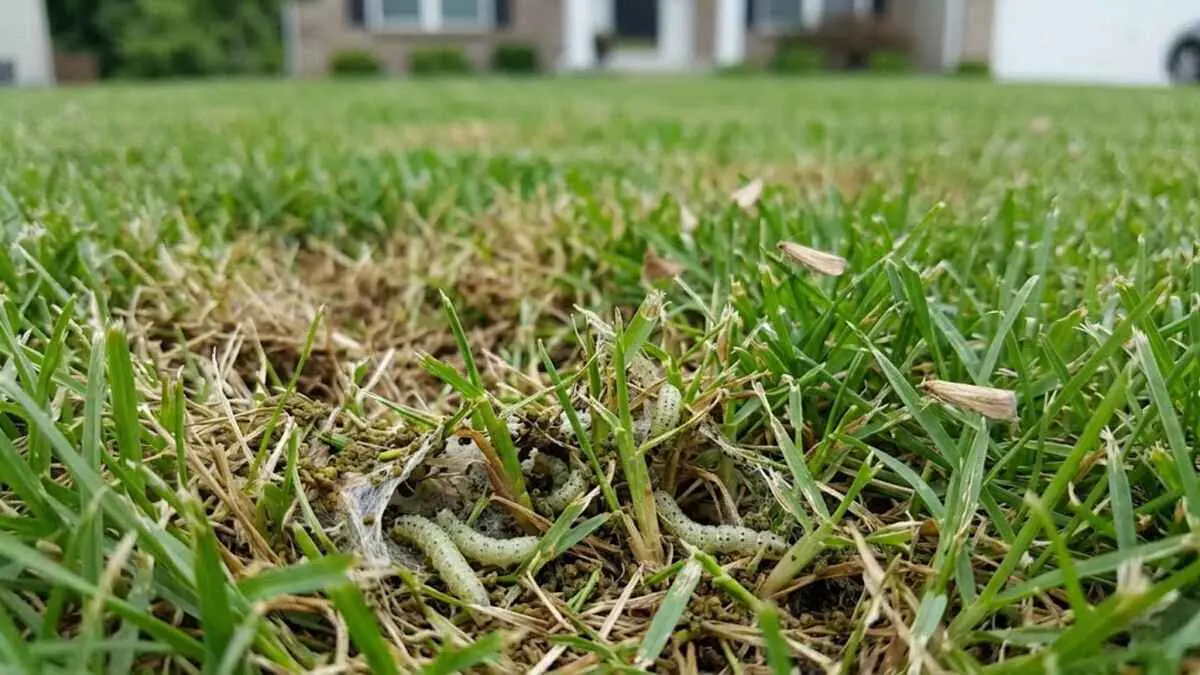
A lush lawn under drought or heat stress is the prime target for sod webworms: plenty of food for the larvae, and weakened grass that can't fight back. Knowing how to identify and get rid of sod webworms early is your best defense against serious damage.
What Do Sod Webworms Look Like?
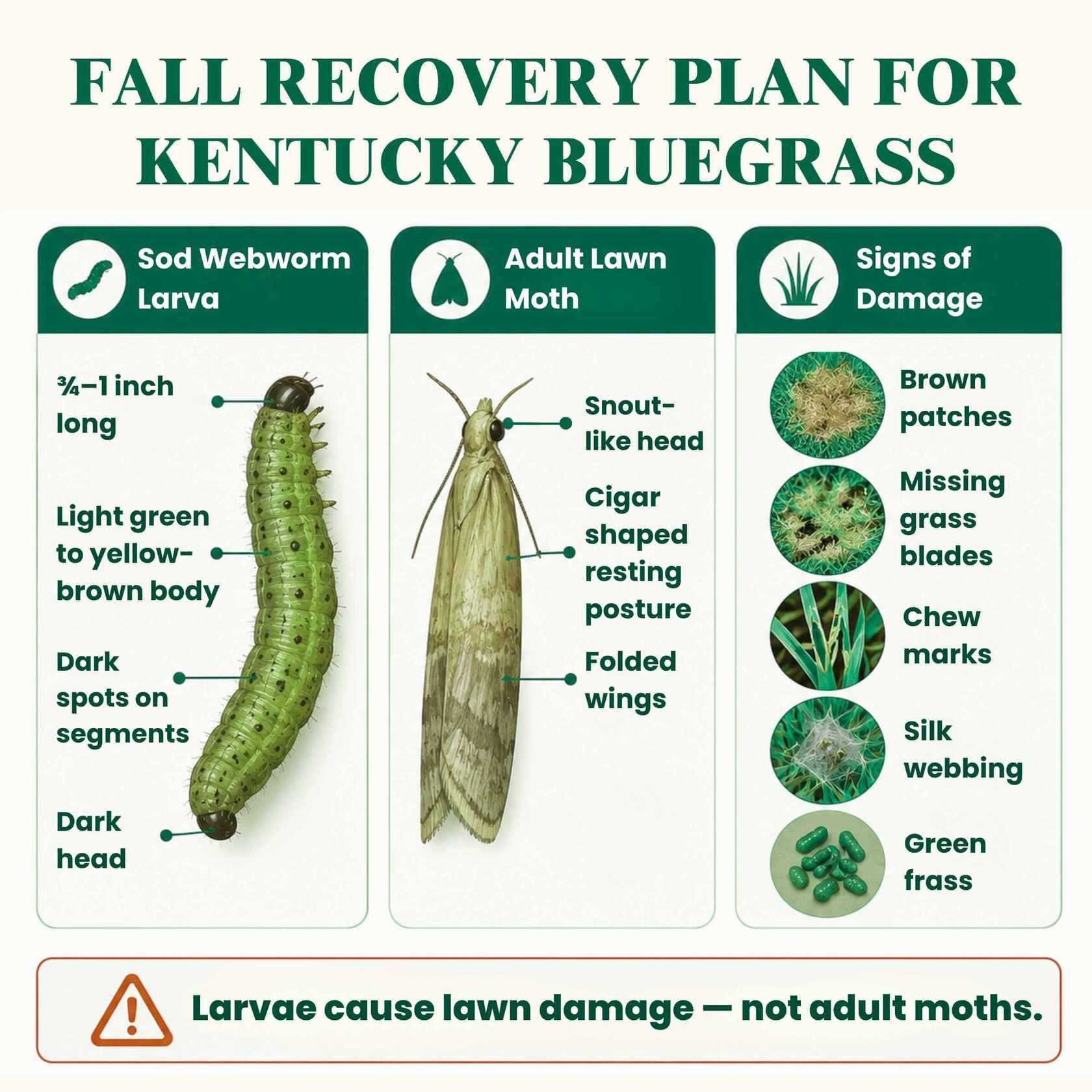
Sod webworms are the caterpillar stage of lawn moths, and they feed on the lawn at night. Here’s what they look like:
Up to about ¾ to 1 inch long, depending on species.
Colors change from whitish to light-green to yellowish-brown as they undergo several larval stages before turning into reddish-brown pupae.
Heads are yellowish-brown to black
Bodies have dark spots on each segment.
Here’s how to identify the adult lawn moths:
Wingspan is typically ¾ to 1 inch
Horns protruding from the head create a snout-like appearance
Wings are brown or dull ash gray
Wings are folded around their bodies while at rest and appear cigar-shaped
Fly low to the ground in the evenings and have a jerky, zigzag flight pattern
Sod Webworm Life Cycle
Understanding the sod webworm life cycle allows you to monitor your lawn for seasonal damage. Although there are many different species of sod webworms, they all follow a similar life cycle:
Spring: Overwintering larvae resume feeding on grass as temperatures warm. Larvae begin to pupate around late spring and early summer. Damage is usually visible by summer.
Summer: Adult lawn moths emerge in early summer to fly, mate, and lay eggs. A single adult female can lay up to 200 eggs. Eggs hatch in approximately 7 to 14 days and the larvae feed on grass until the remainder of summer.
Fall: A second generation of adult lawn moths emerge mid-to late summer and lay eggs. The newly hatched larvae feed on the grass through late September. As temperatures start to drop, the larvae overwinter in the soil.
Diagnose Sod Webworm Damage
Sod webworm damage can often look like other common lawn issues, such as white grubs or fungal diseases. If a sod webworm infestation is expected, look for the following:
Brown, ragged patches in the lawn with missing grass blades
Green frass (fecal pellets) in the grass
Silky webbing coating the grass blades in the early morning
Sod webworm larvae hiding in silk-lined tunnels in the thatch
Clusters of white oval to elliptical eggs tucked in the upper surface of the grass blade
Chew marks on the grass blade’s edge
Sod webworm damage peaks in summer, with some damage possibly appearing in late spring or early fall.
It’s the larvae — not the adult moths — that cause extensive turf damage. They chew off the grass just above the thatch, and pull the blade down into their silk-lined tunnels and eat it.
Does Your Lawn Need Treatment?
Sighting several adult lawn moths doesn’t mean you need to act. Harsh conditions often kill the eggs and young larvae before damage can occur. Wait approximately two weeks after you observe peak moth activity and then apply a soapy water solution to check for larvae.
Bring the larvae to the surface by drenching 1 square yard of infested turf with a soapy solution. The mixed solution should contain:
2 tablespoons of liquid dish soap
2 gallons of water
Count how many sod webworms you see. A healthy, well-established lawn can usually tolerate some sod webworm activity without intervention. However, the following results may signal an infestation severe enough to warrant treatment:
15 larvae in 1 square yard, if the lawn is healthy and not stressed
More than 5 larvae in 1 square yard, if the lawn is stressed
Control Methods for Sod Webworms
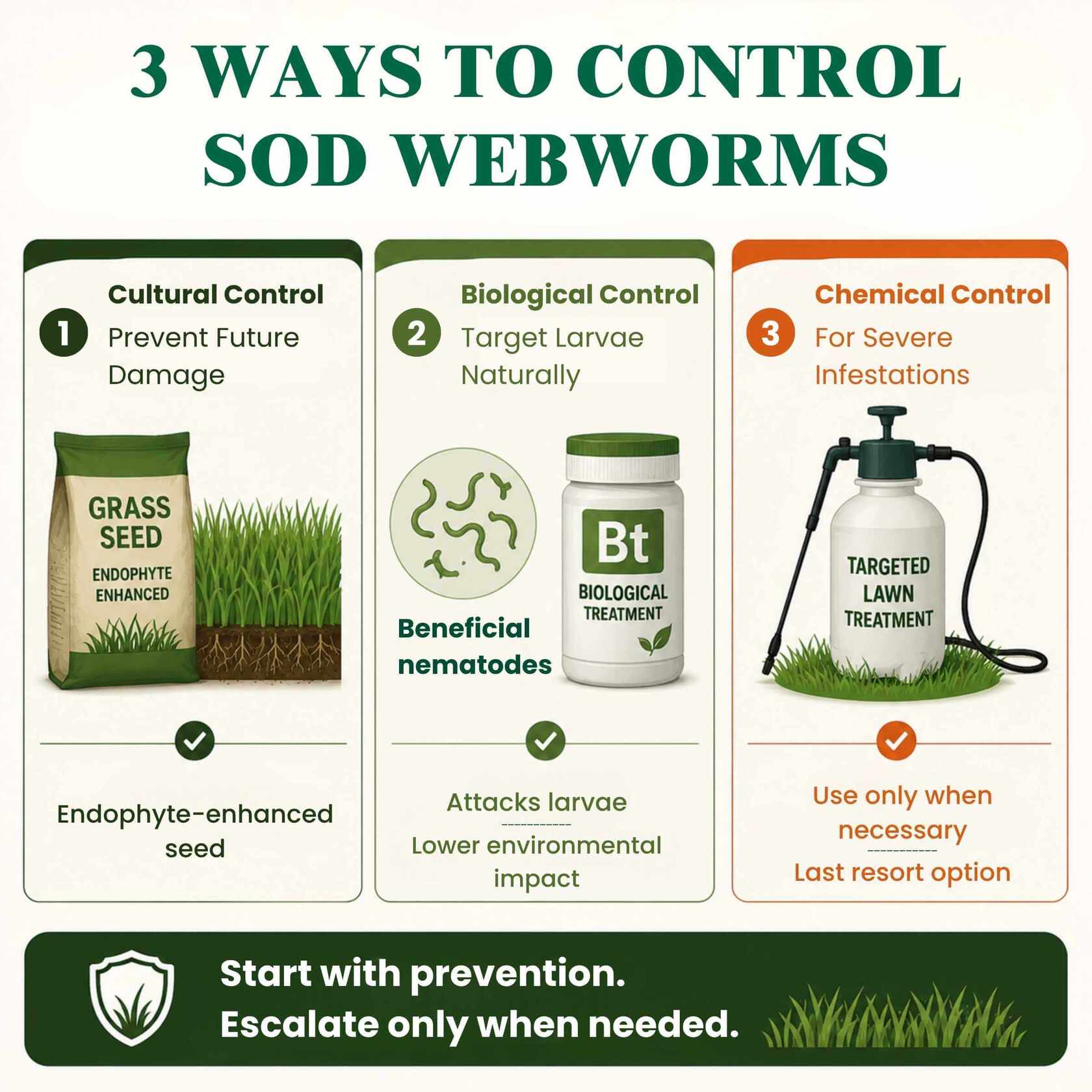
There are several ways to get rid of sod webworms and prevent them from coming back, including cultural, biological, and chemical control.
Cultural Control
The next time you’re shopping for new grass seed, choose an endophyte-enhanced turfgrass seed. Endophytes are beneficial fungi that cause the grass to be less desirable as food for sod webworms.
Always follow labeled directions when using endophyte-enhanced seed, as certain endophyte strains can be harmful to livestock.
Biological Control
Insect-parasitic nematodes, such as Steinernema Carpocapsae, are available to control sod webworm larvae. Nematodes do not have a long shelf-life, so always check their expiration date. Apply to moist (not soggy) soil during the coolest time of day and irrigate for 2 weeks after application to keep soil moist.
The microbial insecticide Bacillus thuringiensis ssp. kurstaki (Bt) can help suppress sod webworm larvae, but it has some limitations. It breaks down rapidly in sunlight, is ineffective against late instar larvae, and easily washes off leaves. Apply when larvae are in the early instar stages and do not irrigate for 2 days after application.
Chemical Control
An insecticide application should be used as a last resort when controlling any pest. Here’s why:
Chemical insecticides can be harmful to the natural enemies that prey on sod webworms, such as parasitic wasps, earwigs, ground beetles, and birds. Insecticides can also harm pollinators and the lawn’s ecosystem.
If the sod webworm infestation is severe enough to merit chemical intervention, treat with any of the following insecticides:
Acephate
Bifenthrin
Carbaryl
Cyfluthrin
Lambda cyhalothrin
Permethrin
-
Spinosad
Mow and irrigate the lawn before applying insecticide. Apply insecticides in the late afternoon or early evening, when larvae are actively feeding. Do not mow or irrigate the turfgrass for at least 24 hours after chemical treatment.( GreenPal Marketplace )Get 5 free bids from local lawn prosTop-rated pros near you send real quotes in minutes — no contracts, no haggling.Get My Free BidsNo credit card required. Get matched in 60 seconds.
How to Recover the Lawn From Sod Webworm Damage
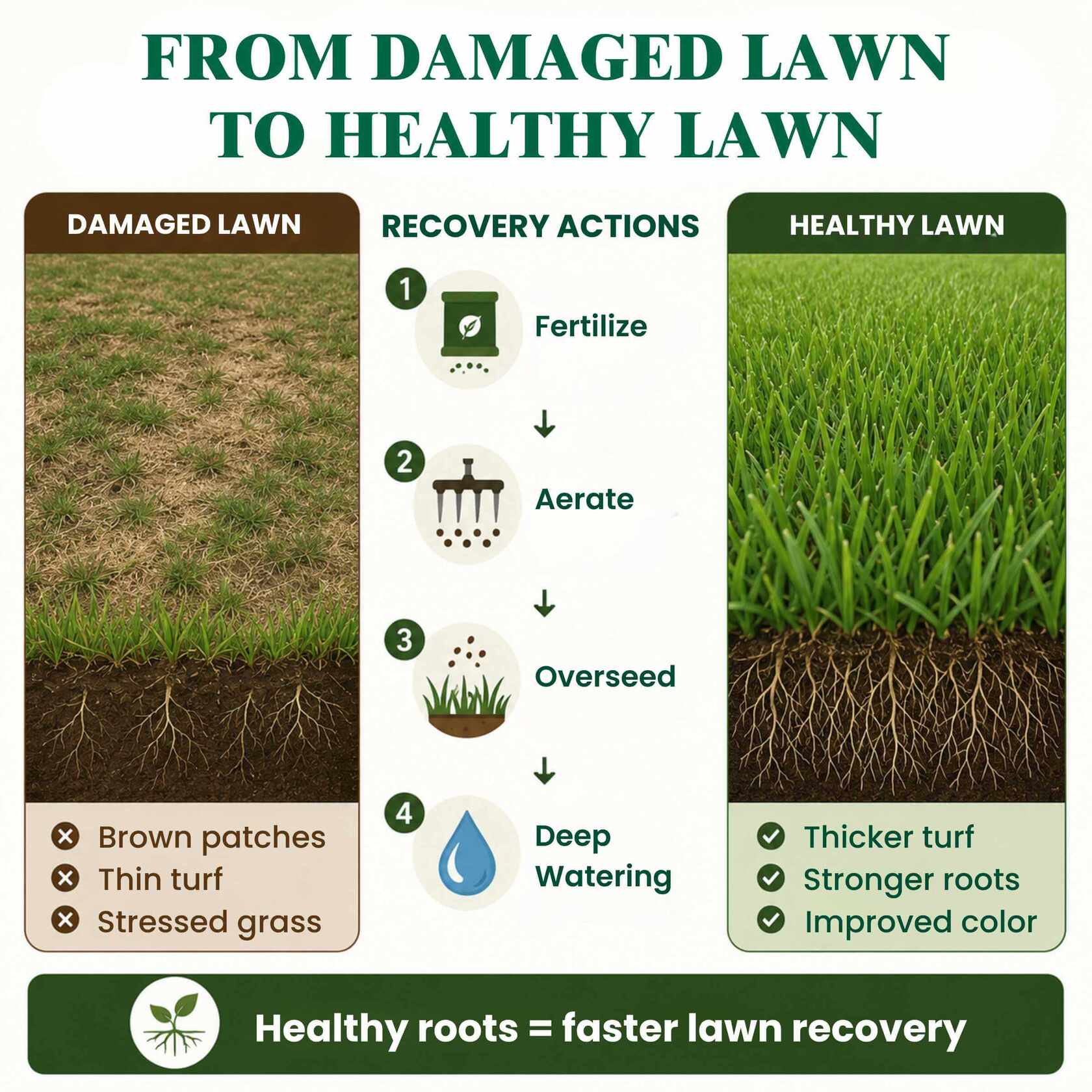
After addressing the infestation, begin turf recovery with a well-balanced fertilizer, aeration, planting new grass seed, and watering deeply. The key is to adopt a good lawn care routine that encourages a deep root system.
If you don’t know where to start, check out the following lawn care guides to help boost your lawn’s health and recovery:
Frequently Asked Questions About Sod Webworm Control
Does Removing Thatch Get Rid of Sod Webworms?
Dethatching the lawn removes the sod webworm’s habitat, but it does not completely eliminate them. Larvae can still be present in high numbers even without a thatch layer.
Does Mowing the Lawn Kill Sod Webworms?
No, mowing the lawn does not kill sod webworms. These pests primarily live and feed in the lower thatch layer and soil, and are generally out of reach of the mower blades.
However, mowing the lawn at the right height and following good mowing habits can help your lawn be more resilient against sod webworm damage. Consider scheduling professional lawn mowing services to ensure your lawn’s height and health stay on track.
Do Adult Lawn Moths Damage the Grass?
No, it is the sod webworm larvae that damage the grass, not the adult lawn moths.
Which Turfgrasses Do Sod Webworms Harm Most?
While any turfgrass variety can be susceptible to sod webworms, Kentucky bluegrass, fine fescues, and bentgrass often suffer the most damage.
In warmer areas, tropical sod webworms commonly target St. Augustingrass, bermudagrass, and centipedegrass.
Hire a Lawn Care Professional
Most healthy lawns won’t show visible sod webworm damage. However, if there are more than 15 larvae per square yard — or more than 5 larvae per square yard in stressed lawns — the lawn becomes more susceptible to damage.
These lawn pests are widespread and actively damage lawns throughout the United States, including the humid corners of Orlando, Florida and dry regions of Reno, NV. If your lawn is suffering from sod webworm damage, consider hiring a local lawn care professional to restore its vigor and health.