


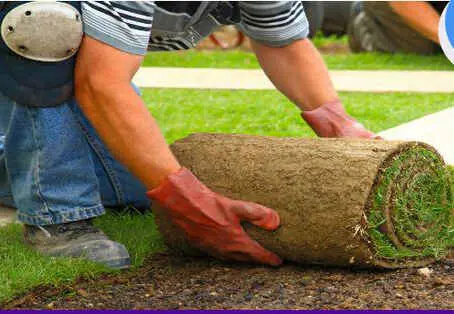
In this guide, you will learn how to install sod in just five easy steps.

So you have decided to go with turf, but you aren't too sure about how to install sod? You have come to the right place. Sod installation doesn't have to be difficult, and with these 5 simple steps, you will have your brand new lawn in no time!
Once you have decided on your turf and had it delivered, you are now ready to install your new greenery. If you need help deciding on a turf variety, check out our turf variety guide.
Let's get started with step number 1!
The first step in our guide on how to install sod is very similar to many other landscape projects: start with a clean, level surface.
There are a few different techniques that can be implemented for this process.
How to Install Sod Without Removing Existing Lawn
In my experience, if you have an existing lawn, it is not always necessary to remove it in order to install sod, as long as you can level the ground with some organic material.
But remember, you will need to make the sod level with any edges, such as walkways, driveways, or any other surface level with the ground.
To install sod on an existing lawn, cut any existing grass low and level out any holes or step dips in the yard. Bring in a topsoil/compost mix and spread it evenly through the yard. In most cases, it won't be necessary to add too much extra dirt, but the little bit of compost will help give some nutrients to the roots while your new grass becomes established
How to Remove Existing Lawn
Though it is generally thought to be OK to lay sod over an existing lawn, some landscapers and homeowners prefer to remove any existing lawn before the installation of sod.
There are three ways to remove your existing lawn:
Using Chemicals
Using a glyphosate like Round Up, you can spray your existing lawn and sod over the dead grass.
Using a Tiller or Bedscaper
If you live where rocks and roots are not an issue, you can use a tiller or bed scaper to till existing grass into the soil. While you're at it, add some compost and fertilizer and mix it in. This type of lawn preparation is timely, but it may be the best way to really give your sod a head start.
Using a Shovel (and elbow grease)
If you are really determined to remove that grass and don't want to use chemicals or can't use a tiller, then a shovel may just be your best option. It’s a lot of work, but it will get the job done. Be sure your surface is level when you are through
.
Now that you have prepared the surface its time to make sure that your edges are prepared properly.
You may have already done this in step one of How to Install Sod, but if you have not, be sure to do so now.
Be sure that edges along any paths, parts of the driveway, or garden beds are dug down enough that when the sod is laid, it will be even with the surface. Usually, this will be about 1 inch below the fixed edge you are installing around.

If you have not already, it’s time to fertilize.
Fertilizing now will allow all of your fertilizer to get fully beneath the surface to feed the roots. Though you can add fertilizer after laying the sod, you may lose some of it due to runoff.
Fertilizers are essential for a green lawn as they aid your new sod with nutrient uptake and improve the soil's pH, which allows the roots to establish themselves deeper in the soil, leading to a healthier, happier, and greener lawn.

Now it’s time for the fun part!
Your surface has been leveled and prepared, and it’s time to unroll your brand-new lawn!
Start with the longest fixed edge or any edge in the landscape that cannot be moved, e.g., garden beds, house, sidewalk, etc. Using scissors, clippers, or a knife, cut your edge in, laying the sod parallel to the longest fixed edge.
Tips For A Proper Installation
- Start the first run on the longest fixed landscape edge
- Be sure to stagger each run so that the short edges don’t line up with each other
- Do not overlap edges
- Be sure that the turf is level with any fixed edge, where it needs to be

Water your new lawn, and admire your hard work!
Make sure you water the new sod for at least one hour per day for the first 10 days; otherwise, the investment in your new turf grass will most likely perish, as newly laid sod needs tons of water while it is "rooting" into your lawn.
If you are installing your grass during the summer months, you'll need to double the watering to at least twice a day for a one-hour duration to compensate for the high temperatures. Of course, if you're lucky enough to get some rain, you will not need to water on that particular day.
Sod Installation TLDR:
5 Easy Steps:
1. Prepare the Ground: Level your existing lawn or remove it (optional). Add topsoil/compost mix.
2. Edge Your Lawn: Dig down edges around paths, driveways, etc., to match the sod level.
3. Fertilize: Give your new grass nutrients before laying it.
4. Lay the Sod: Start with a long edge, stagger rolls, and don't overlap.
5. Water Deeply: 1 hour daily for 10 days (double in summer). If you would rather have a pro handle the install or the follow-up care, compare lawn care providers near you.


