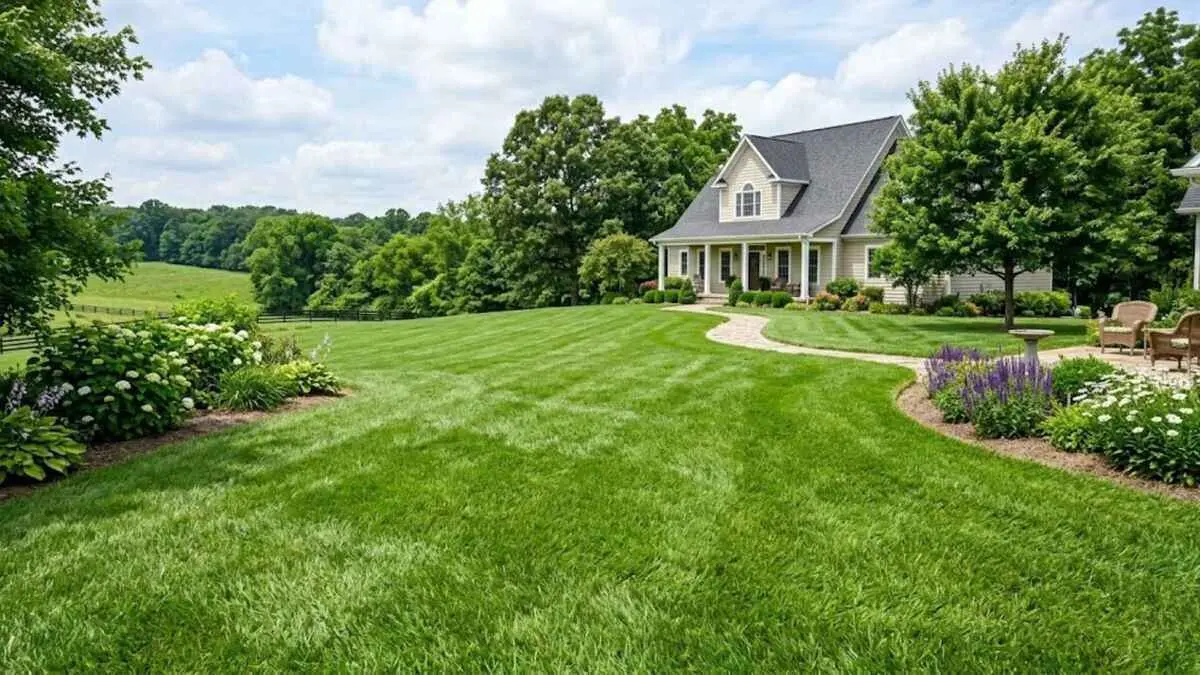
If you grow Kentucky bluegrass, don’t follow your cousin’s lawn care routine who lives down south. They’re likely growing warm-season grass, which requires a different level of care than your cool-season lawn. In this lawn care calendar, we’ll show you how to maintain Kentucky bluegrass month by month.
The key is to concentrate your lawn maintenance around spring and fall when the grass is actively growing, with early fall being the busiest time.
▲ marks the best time to perform the designated task.*
△ marks an acceptable time to perform the designated task.*
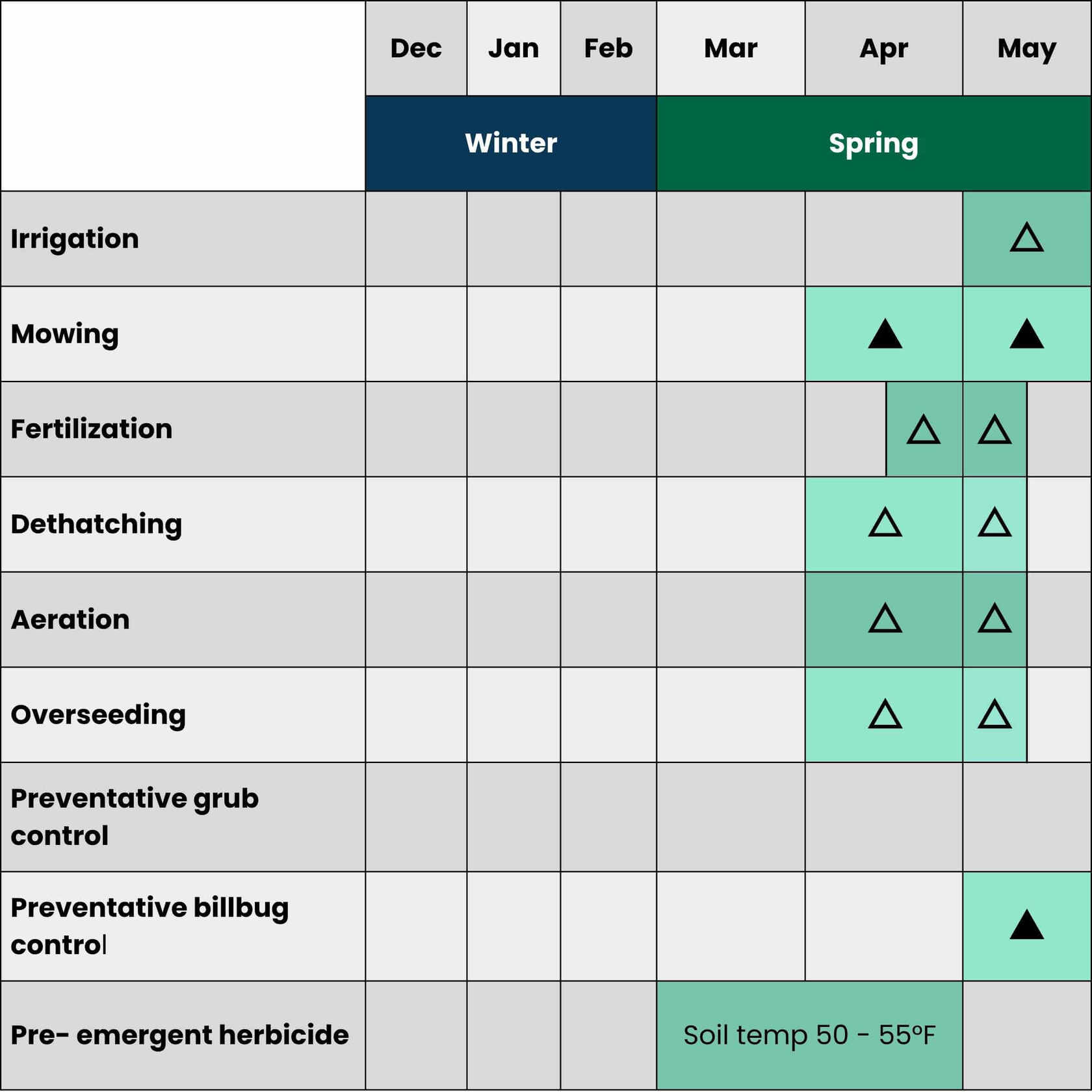
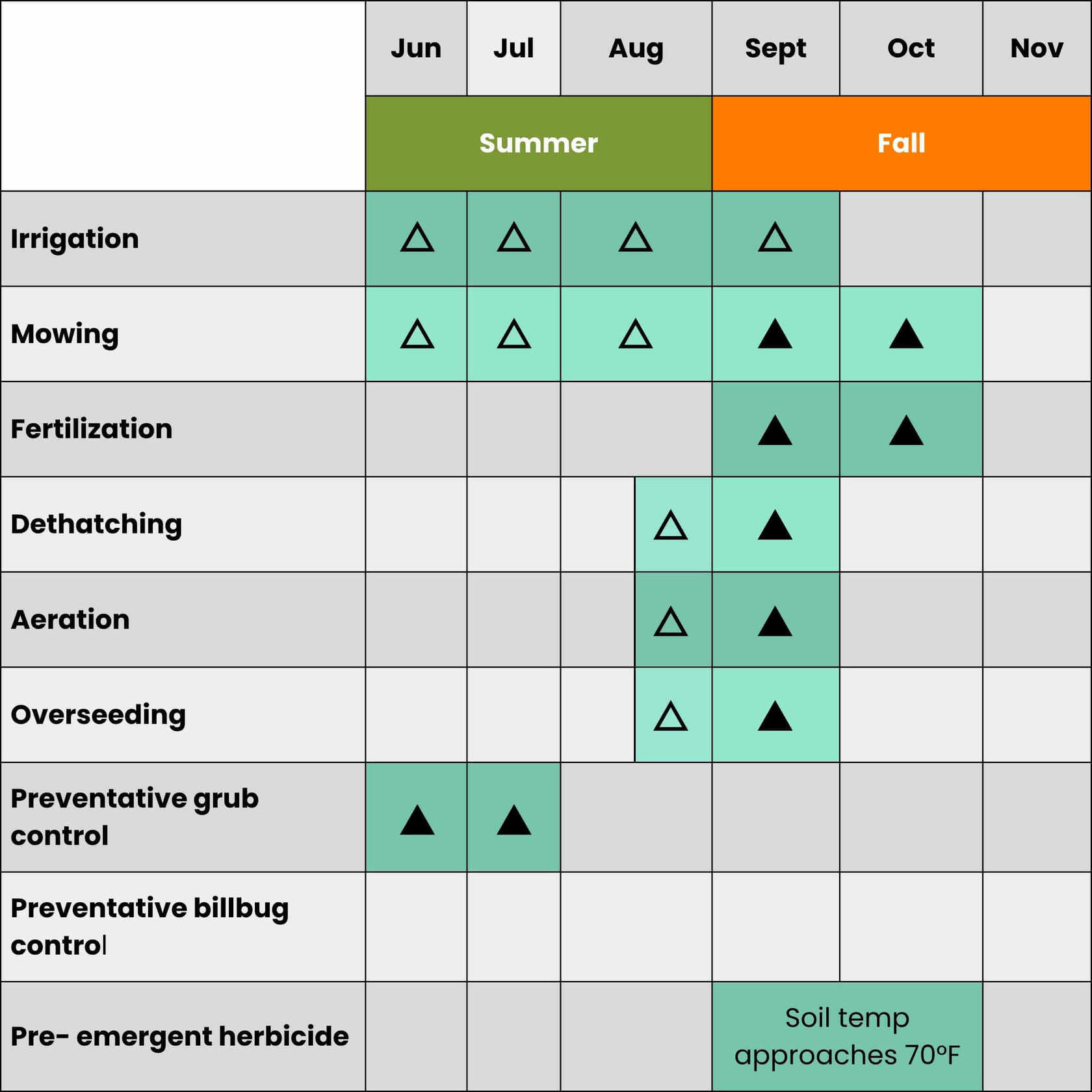
*Timing will vary by location, and this maintenance calendar represents a general range for Kentucky bluegrass lawns across northern and transition-zone regions. Those living in warmer climates or the transition zone can expect to perform treatments up to 3 or more weeks sooner than those living in cooler northern climates. Location, forecasted frost dates, soil conditions, age of lawn, and several other factors can affect maintenance timing.
Spring: March, April, May
As the cool weather starts to rise in late March and early April, your Kentucky bluegrass lawn starts to exit winter dormancy.
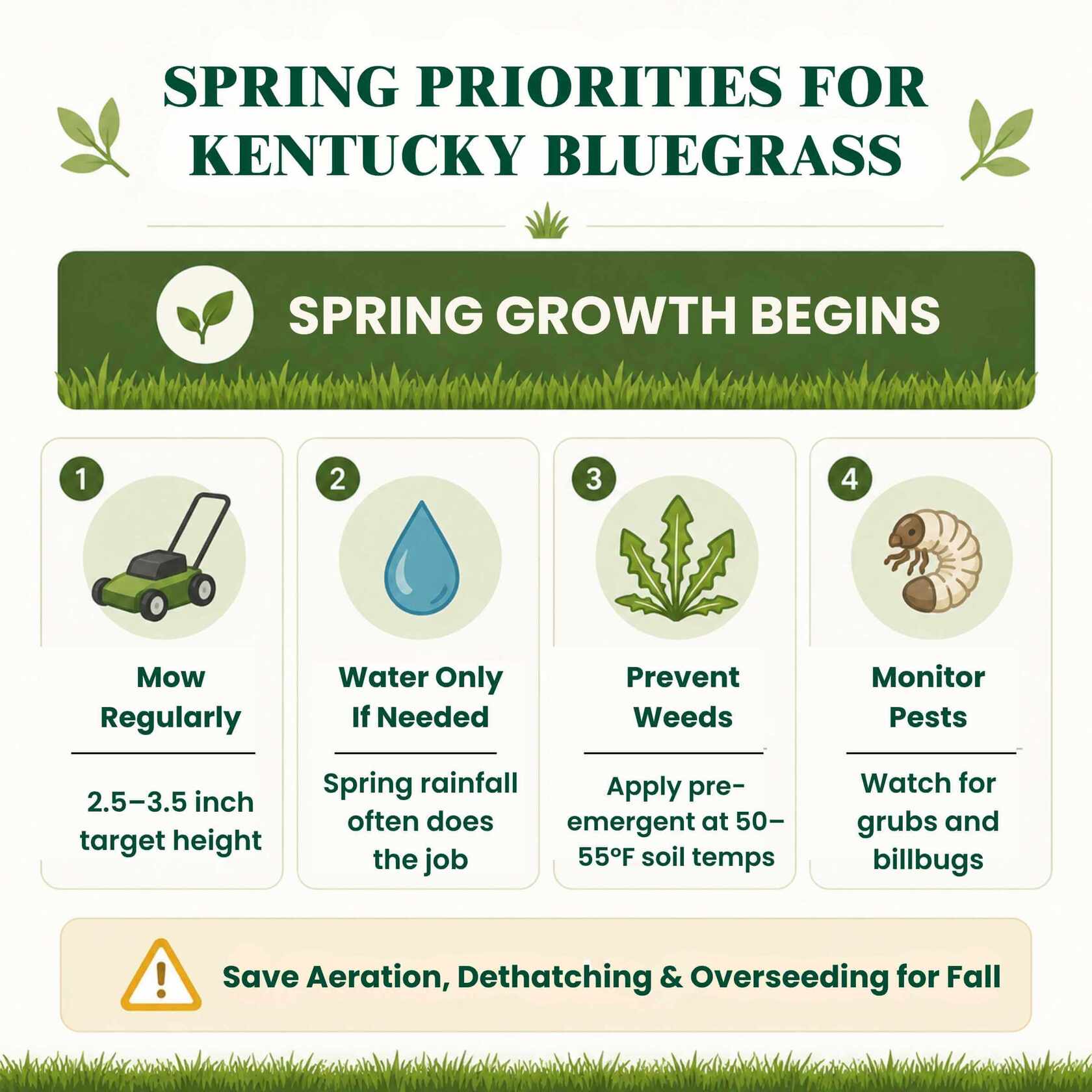
While mid- to late spring is an acceptable time to dethatch, aerate, and overseed Kentucky bluegrass, it’s best to delay these tasks until early fall.
Mowing
Cool-season grasses do most of their growing when temperatures are cool, which means you’ll do most of your mowing in spring and fall.
Kentucky bluegrass has a preferred range between 2.5 to 3.5 inches tall. To avoid removing more than one-third of the grass blade at once — which is harmful to turf — cut your Kentucky bluegrass when it reaches between 3.75 to 5.25 inches tall.
Always mow with sharp blades and avoid common mowing mistakes to protect the health of your home lawn.
Fertilizer
Always base fertilizer and soil amendment applications (such as lime and sulfur) on the results of a soil test.
Fall is the best time to fertilize Kentucky bluegrass. However, some soil tests may recommend 0.75 to 1 pound of nitrogen fertilizer per 1,000 square feet in late April or early May.
Avoid fertilizing with nitrogen in early spring, which is too soon for Kentucky bluegrass.
Irrigation
Established lawns rarely require supplemental irrigation thanks to spring’s frequent rainfall. However, if your lawn shows signs of drought stress, such as discoloration, wilting, or lingering footprints, provide supplemental irrigation as needed.
Learn More: How to Water Your Lawn: Tips & Schedule
Weed Control
A healthy, well-maintained lawn is your best defense against weeds. However, if weeds have been a recent problem in your lawn, a pre-emergent herbicide can help prevent grassy weeds and broadleaf weeds in summer.
Apply pre-emergent herbicide when soil temperatures are between 50 and 55°F, typically in early to mid-spring.
Tips:
Most pre-emergent herbicides require waiting 8 to 12 weeks or longer before planting new grass seed.
Water in the herbicide immediately after application to activate its chemical barrier.
Pest Control
Common pest issues for Kentucky bluegrass lawns include white grubs and billbug grubs.
If your lawn shows signs of white grub damage in spring, a severe infestation may warrant preventative insecticides in summer.
If your lawn has a recent history of billbug damage, preventative sprays are best applied around early May before adult billbugs lay eggs.
Summer: June, July, August
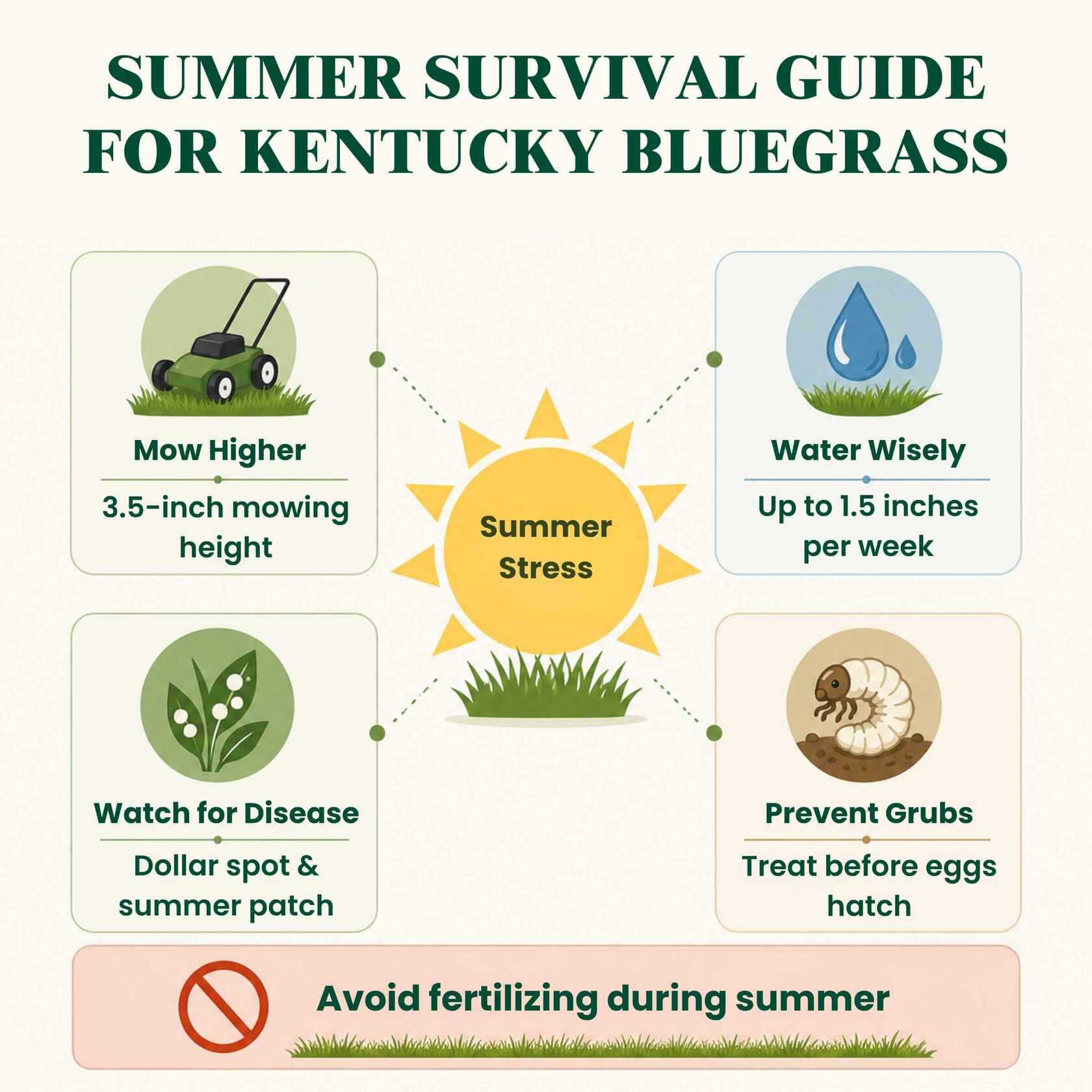
Cool-season grasses grow slowly in summer due to the warmer weather, which means mowing will be less frequent. Keep an eye out for drought stress, and avoid invasive treatments until temperatures start to cool in late-summer.
Do not fertilize Kentucky bluegrass in summer.
Raise Mowing Height
Raise the mowing height to 3.5 inches if you haven’t already. Tall grass in summer helps retain moisture by shading the soil and cooling the roots.
Irrigation
Kentucky bluegrass generally needs more water to stay green in the summer heat than many common turfgrass varieties. It survives extended, hot periods of drought by going dormant and turning brown.
There are generally two approaches:
1) Try to maintain Kentucky bluegrass’ green color in summer by providing it with 1.5 inches of water per week.
2) Allow the grass to go dormant and turn brown. Dormant grass can still die from drought stress, so it’s important to monitor rainfall. The Iowa State University Extension and Outreach recommends applying 1 to 1.5 inches of water in a single application to bluegrass lawns that have been dormant for 4 to 6 weeks. Water again 7 days later, and the grass should begin to green up.
Disease Control
Monitor your lawn for signs of disease, including dead circular patches or web-like growth (mycelium) on the grass blades. Common diseases affecting Kentucky bluegrass include dollar spot and summer patch.
Fungal diseases can be difficult to fully control with fungicides alone, particularly once established. This is why a good lawn care routine is the best way to combat fungal disease. If your lawn is struggling with frequent disease infestation, identify the disease and follow the appropriate cultural treatment plan.
Weed Control
Sometimes weeds break through your lawn’s grass canopy, even when you do everything right. When this happens, you can control weeds via hand pulling, digging, post-emergent herbicides, weeding tools, or homemade weed killers.
Learn More:
Pest Control
If your lawn had a severe white grub infestation in spring or recent years, insecticides can help prevent future damage when a good lawn care routine isn’t cutting it.
If needed, apply preventative insecticides formulated for white grub control in June or July, before the eggs hatch in mid-to-late July.
Fall: September, October, November
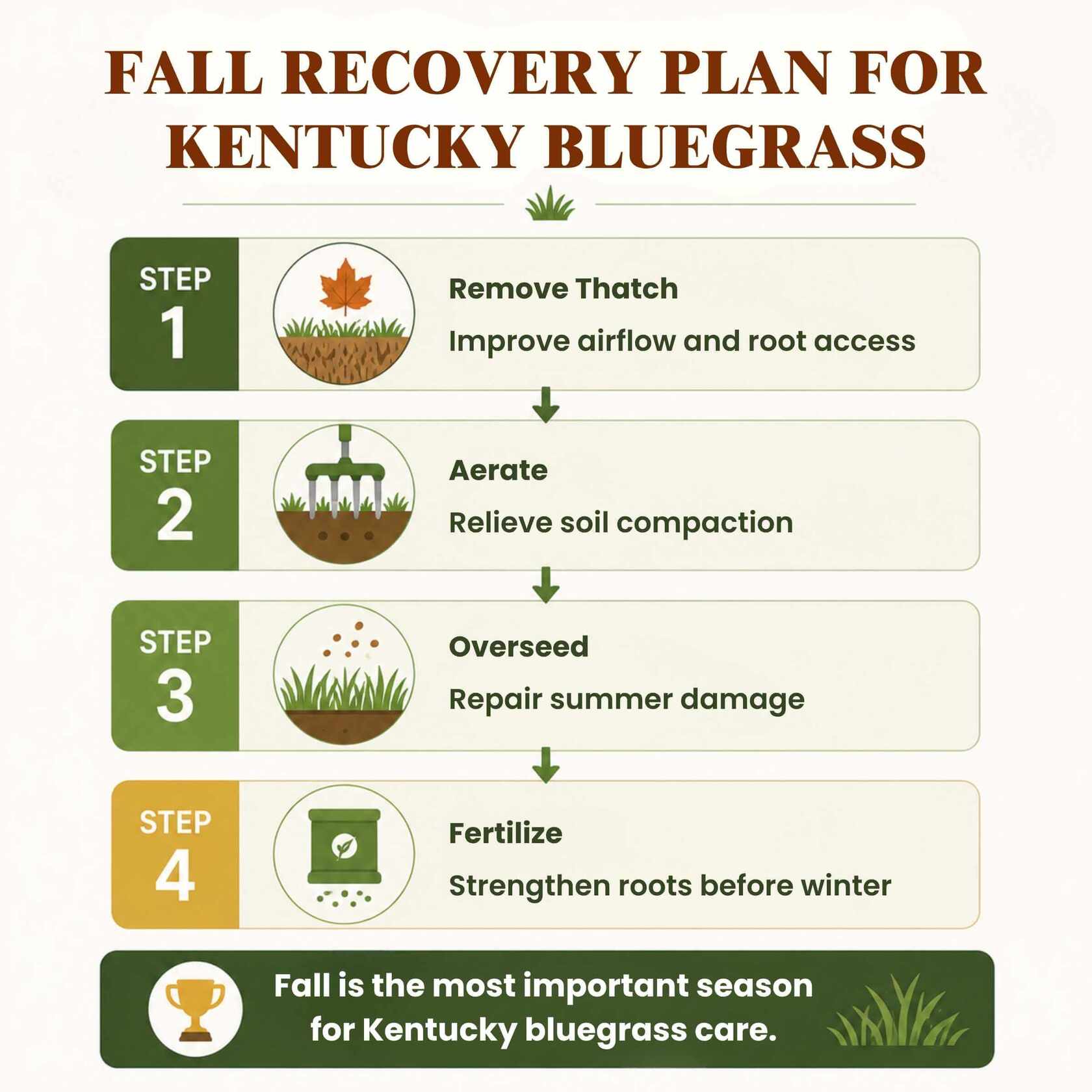
As temperatures start to drop again in fall, Kentucky bluegrass resumes its regular growth. Early fall is the best time to perform most of your lawn care chores, such as thatch removal, aeration, fertilization, and overseeding.
Thatch Removal
A thick thatch layer blocks water, oxygen, and nutrients from reaching the grass roots. Remove thatch in late summer or early fall, before aeration.
Kentucky bluegrass is moderately prone to thatch accumulation, and may not require thatch removal every year. Remove a wedge of soil from the ground and measure the thatch layer. If it exceeds one-half inch thick, it ought to be removed.
Learn More: Why, When, and How to Dethatch Your Lawn
Aeration
Compacted soil prevents the movement of oxygen, nutrients, and water throughout the soil and prevents grass roots from growing deeply.
If your Kentucky bluegrass lawn has compacted soil, aerate in late summer or early fall. Aerate after removing thatch, but before applying pre-emergent herbicide.
Sandy soil typically needs aeration every 1 to 3 years. If you live in an area with heavy clay soils (such as Cleveland,OH or Denver, CO), your Kentucky bluegrass lawn may be more susceptible to soil compaction. Consider scheduling professional aeration services to relieve your lawn’s soil and boost its health.
Learn More: Why, When, and How to Aerate Your Lawn
Overseeding
If your lawn suffered from summer damage, plant new grass seed to encourage recovery and new growth.
The best time to overseed Kentucky bluegrass lawns is in late summer or early fall. Kentucky bluegrass seed can grow in spring, however, young grass can become heavily infested with weeds.
For better seed-to-soil contact, overseed after aeration. Avoid overseeding if applying pre-emergent herbicide.
Fertilizer
Fall is the best time to fertilize Kentucky bluegrass. Calculate fertilizer rates according to the recommendations of a soil test.
Kentucky bluegrass lawns generally need two applications of 0.75 to 1.0 pound of nitrogen per 1,000 square feet: once in early to mid-September and a second time around the final mow of the season.
Note: If overseeding, avoid a heavy nitrogen application for approximately 4 to 6 weeks (nitrogen may cause established grass to outcompete young seeds).
Learn More:
Soil Testing
Early fall is the best time to test your soil if you haven't recently done so. Send a soil sample to your local cooperative extension for laboratory testing to receive detailed care instructions suited to your lawn, such as specific fertilizer and soil amendment application rates.
Tip: Test soil every 3 to 5 years.
Weed Control
If your lawn has a history of winter weeds or dandelions, apply pre-emergent herbicide in early to mid-fall as temperatures drop and approach 70°F. Water in the herbicide immediately after application.
Note: Read the label to determine the appropriate wait period between application and overseeding. Dethatching and aeration can break down the chemical barrier, so perform these treatments before application.
Irrigation
Like spring, fall typically provides healthy lawns with enough precipitation. During periods of drought, monitor your lawn for signs of thirst and ensure it’s receiving 1 to 1.5 inches of water per week.
Lower Mowing Height
As grass growth starts to slow, gradually lower the mowing height down to 2.5 inches over several mows to avoid removing too much at once. Tall grass is susceptible to winter damage, snow molds, and matting.
Don’t cut the grass too short — extremely short grass can be just as vulnerable to winter injury as tall grass. When making seasonal adjustments, stay within the grass’ recommended mowing height range.
Leaf Removal
A thin layer of leaves isn’t bad for the lawn, but too many leaves spell trouble. A thick layer of leaves can suffocate the turf and block sunlight. Leaves can also spread pests and diseases, especially when wet.
Leaf removal methods include raking, leaf blowing, mulch mowing, or professional leaf removal services.
Winter: December, January, February
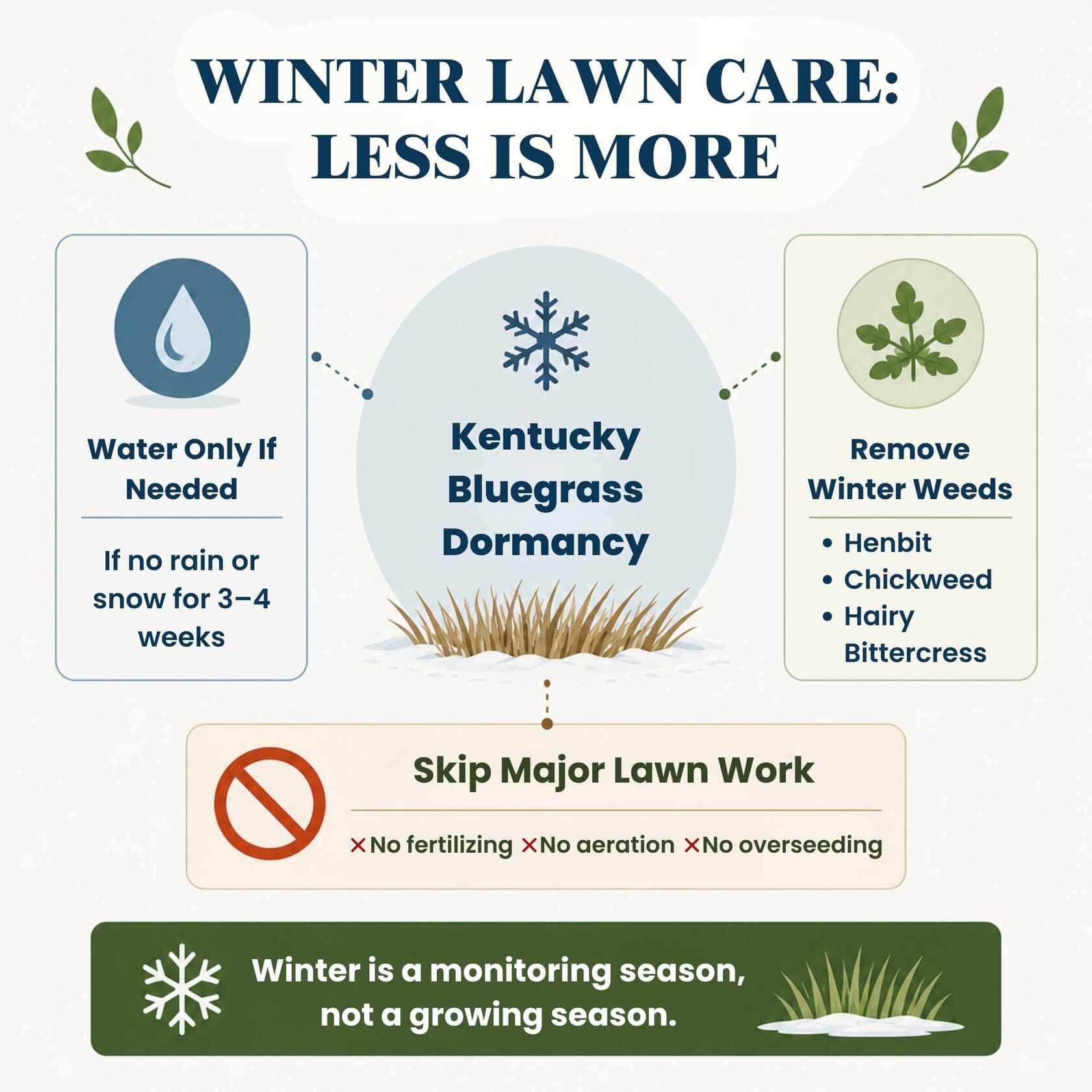
Both warm- and cool-season lawns enter dormancy as temperatures drop and winter rolls in.
Irrigation
Supplemental water generally isn’t needed in winter. However, if it hasn’t snowed or rained in 3 to 4 weeks, cool-season grasses benefit from 0.5 inch of water when air temperatures are above 40°F and the soil is not frozen.
Weed Control
If necessary, remove winter weeds, such as henbit, chickweed, and hairy bittercress.
Hire a Lawn Care Professional
Kentucky bluegrass is known for its rich, dark-green color, but maintaining that color typically requires consistent supplemental irrigation, particularly in summer.
Once temperatures drop in autumn, prepare to mow more frequently and repair summer damage due to Kentucky bluegrass’ low heat tolerance. If your schedule gets in the way, consider hiring a vetted lawn care professional to maintain your lawn’s health and appearance.