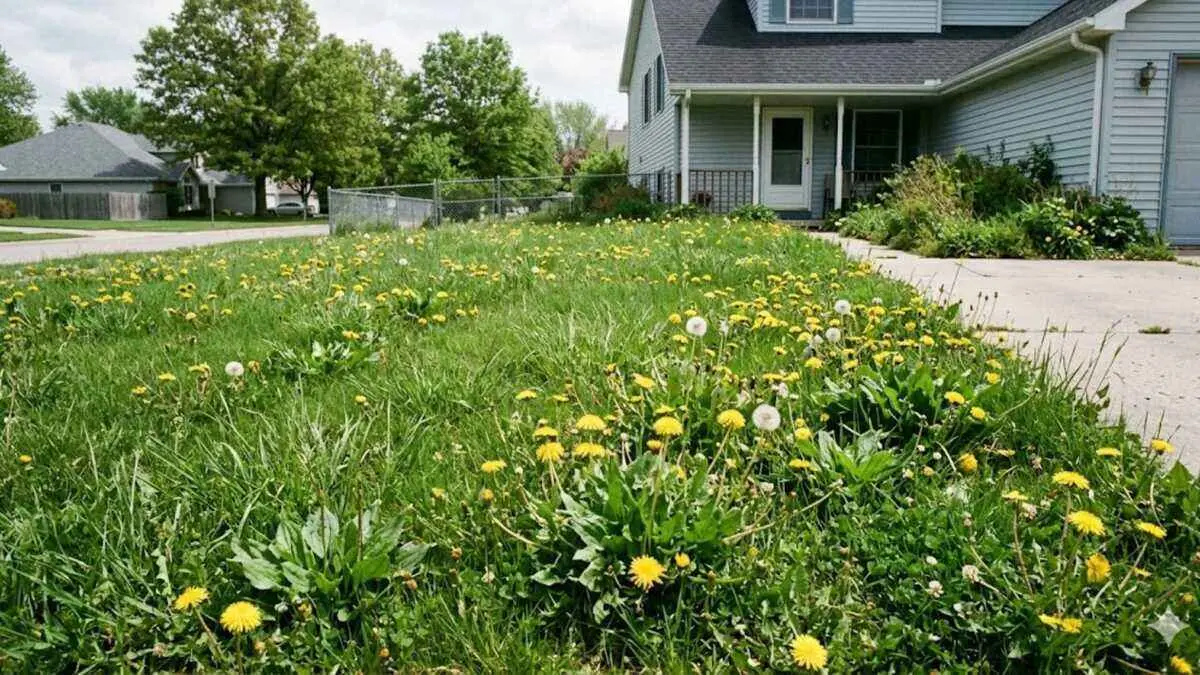
13 Reasons Why Weeds Grow In Your Lawn

Even when you think you're doing everything right, weeds still seem to find a way back. After learning these 13 reasons why weeds grow in your lawn, you'll have a clearer picture of what's really going on beneath the surface and how these persistent plants keep spreading.
The causes aren't always obvious. You may have applied a preventative herbicide, not realizing your core aerator broke down the chemical barrier. Or maybe you skipped the most important step — watering the herbicide into the ground. Small oversights like these can give weeds the upper hand and lead to frustration.
1. Your Lawn Care Routine Is Flawed
A healthy, dense, vigorous lawn is able to crowd out weeds and block sunlight from reaching weed seeds. But if your lawn care routine is subpar, weeds have a better chance at outcompeting and breaking through a weak, thin, and stressed canopy of grass.
Solution: Ways to boost your lawn's density and growth include overseeding thin patches, providing enough fertilizer, and prioritizing soil health.
Not sure what lawn care treatment your routine is missing? Check out this Beginner's Guide to Lawn Care.
2. You’re Mowing Improperly
Common lawn mowing mistakes, such as mowing too much at once or using dull mower blades, can stress the turf over time. This invites weeds as a result, which are able to outgrow the weakened turf. And if you cut the grass too short, this may expose the weed seeds to direct sunlight.
Solution: Follow good mowing habits. Don’t remove more than one-third of the grass blade’s height, avoid mowing wet grass, and always mow with sharp mower blades.
3. You’re Not Testing Your Soil
If you’re fertilizing the lawn without testing its soil, you’re playing a guessing game.
Excessive nitrogen can damage grass roots, weakening the lawn and making it more susceptible to weeds. Some weeds even prefer fertile soils, such as dandelion, purslane, and henbit.
Underfertilizing leads to a lack of nutrients in the soil, which many weeds can tolerate better than turfgrass, such as crabgrass and white clover.
The same principle applies to correcting soil pH. You may throw the soil pH further out of balance if you’re simply estimating your lime and sulfur applications, which can encourage various weeds. For instance, crabgrass and red sorrel appear in low pH soils, and chicory and spotted spurge grow in soils with a high pH.
Solution: Send a soil sample to your local cooperative extension for laboratory testing to receive fertilizer and soil amendment recommendations specific to your lawn.

4. Your Soil Is Compacted
Many weeds, including dandelion, chickweed, plantain, and morning glory, tolerate heavy clay and compacted soils better than most turfgrasses.
If your lawn’s soil is compacted, the lack of oxygen, water, and nutrients moving through the soil can stunt the lawn’s growth and allow weeds to flourish.
Solution: Aerate your lawn with a core aerator when it shows signs of soil compaction.
5. You’re Watering Wrong
Watering too much, not watering enough, and watering at the wrong time can weaken the lawn and create conditions suitable for weed growth.
Yellow woodsorrel, henbit, and white clover may indicate soil that’s too wet, while yarrow, red sorrel, and black medic thrive in dry soils.
Solution:
Ensure your grass is receiving the right amount of water — most established lawns need 1 to 1.5 inches of water per week.
Watering deeply and infrequently (approx. 1 to 3 times a week) promotes a deeper, healthier root system than watering too frequently and for short periods.
Water in the early mornings, before the sun has a chance to evaporate the moisture. Avoid watering in the evenings and at night.
Learn More: How to Water Your Lawn: Tips and Schedule
6. You’re Not Removing the Whole Root System
If you’re manually removing weeds, you may be leaving parts of the root system behind and triggering new growth.
For example, dandelions have a deep taproot (typically 6 to 18 inches long) that can respawn a new plant if just a small fragment of the taproot is left behind.
Nutsedge also has a complex root system. Removing the plant can often trigger its remaining underground, dormant tubers to regenerate new plants.
Solution: Remove the whole root system via digging or long-handled weeders that clamp onto and pry deep roots from the ground (especially taproots).
7. You’re Using Homemade Weed Killer
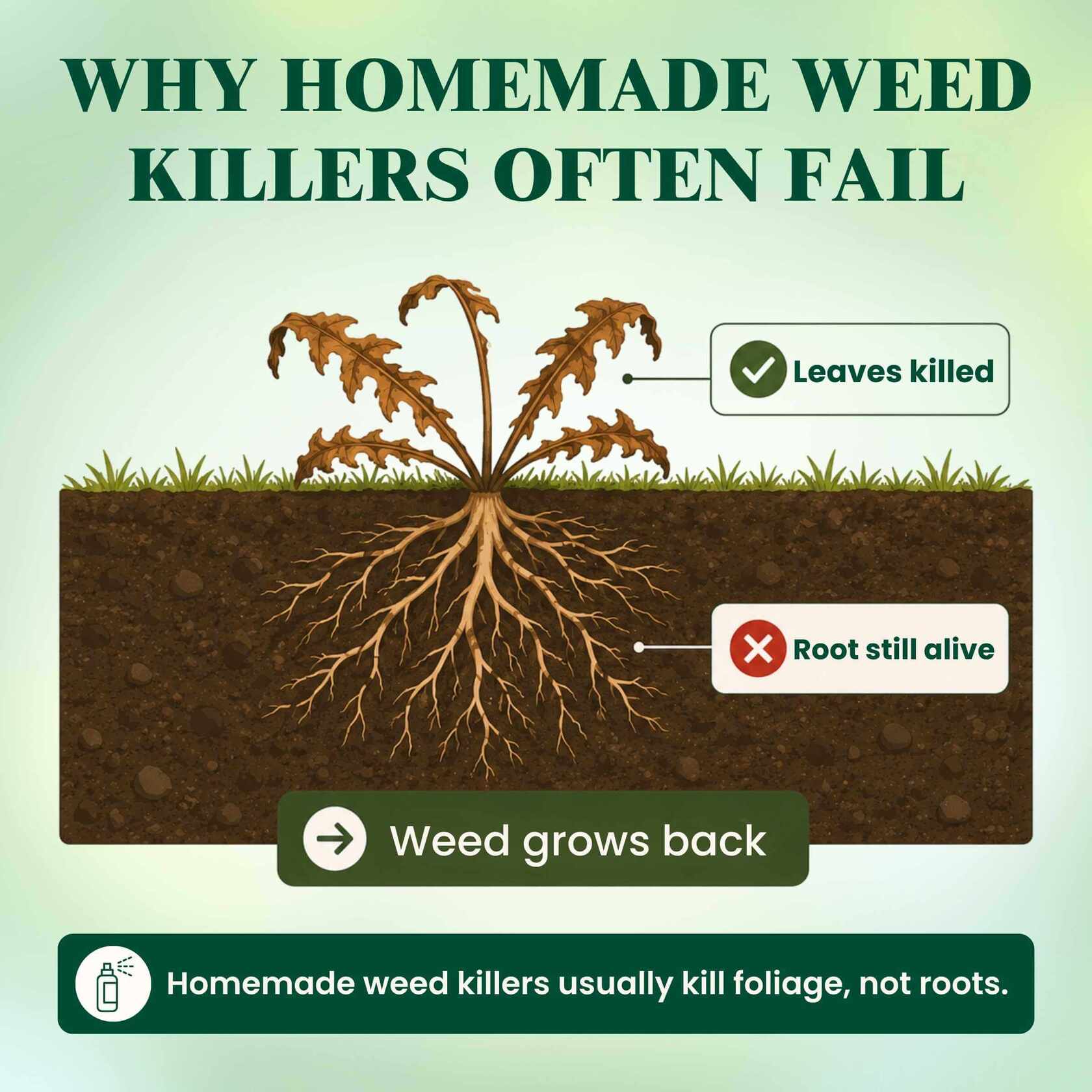
Homemade weed killers, often containing vinegar, dish soap, or salt, work by drying out and killing the weed’s above-ground foliage.
These homemade herbicides only kill parts of the plant they come in contact with and do not travel down to the root system. As long as the root system remains alive, weeds will sprout right back.
Solution (s):
Manually remove the entire root system from the yard.
Use a systemic herbicide that travels down to the root system and kills the whole plant.
Apply homemade weed killer multiple times. Frequent reapplication may eventually exhaust the plant’s root system and energy reserve, resulting in less regrowth.
8. You’re Using the Wrong Herbicide
Herbicides that work against one weed might not work for another. For example, many herbicides that prevent or kill crabgrass won’t manage nutsedge. If weeds keep returning year after year, you may be using the wrong herbicide.
Solution: Correctly identify the weeds invading your yard and apply a control method or herbicide appropriate for that specific weed.
Learn More:
9. You’re Applying Herbicide At the Wrong Time
If weeds plague your lawn despite the pre-emergent herbicide you’ve applied, you may be applying it at the wrong time.
Apply pre-emergent herbicide too soon, and the chemical barrier may wear off before the weed’s germination window ends. Apply too late, and you give the weeds a head start.
Solution:
Use a soil thermometer to measure the soil’s temperature.
To prevent summer weeds, apply pre-emergent herbicide in early spring when soil temperatures are between 50 and 55°F.
To prevent winter weeds, apply pre-emergent herbicide in early fall when soil temperatures drop and approach 70°F.
Learn More: When to Apply Pre-Emergent Herbicide
10. You Didn’t Water In the Herbicide
To activate pre-emergent herbicide, you must water it into the soil immediately after application. If you miss this important step, the product won’t work effectively.
Post-emergent herbicides generally should not be watered into the ground, because these chemicals must stay on the weed.
Solution: Water in pre-emergent herbicide immediately after application and always read the product’s instructions to ensure all steps are met.
11. You’re Breaking the Herbicide Barrier
Pre-emergent herbicide’s chemical barrier lasts in the soil for several weeks. However, invasive treatments like dethatching and aeration can disrupt the barrier, resulting in unprotected soil areas.
Solution: Read the product label to determine how long the chemical barrier lasts and avoid invasive treatments during that time frame. Most pre-emergent herbicides last for 8 to 12 weeks or longer, with some lasting as long as 16 weeks.
12. You Used Contaminated Seed or Soil
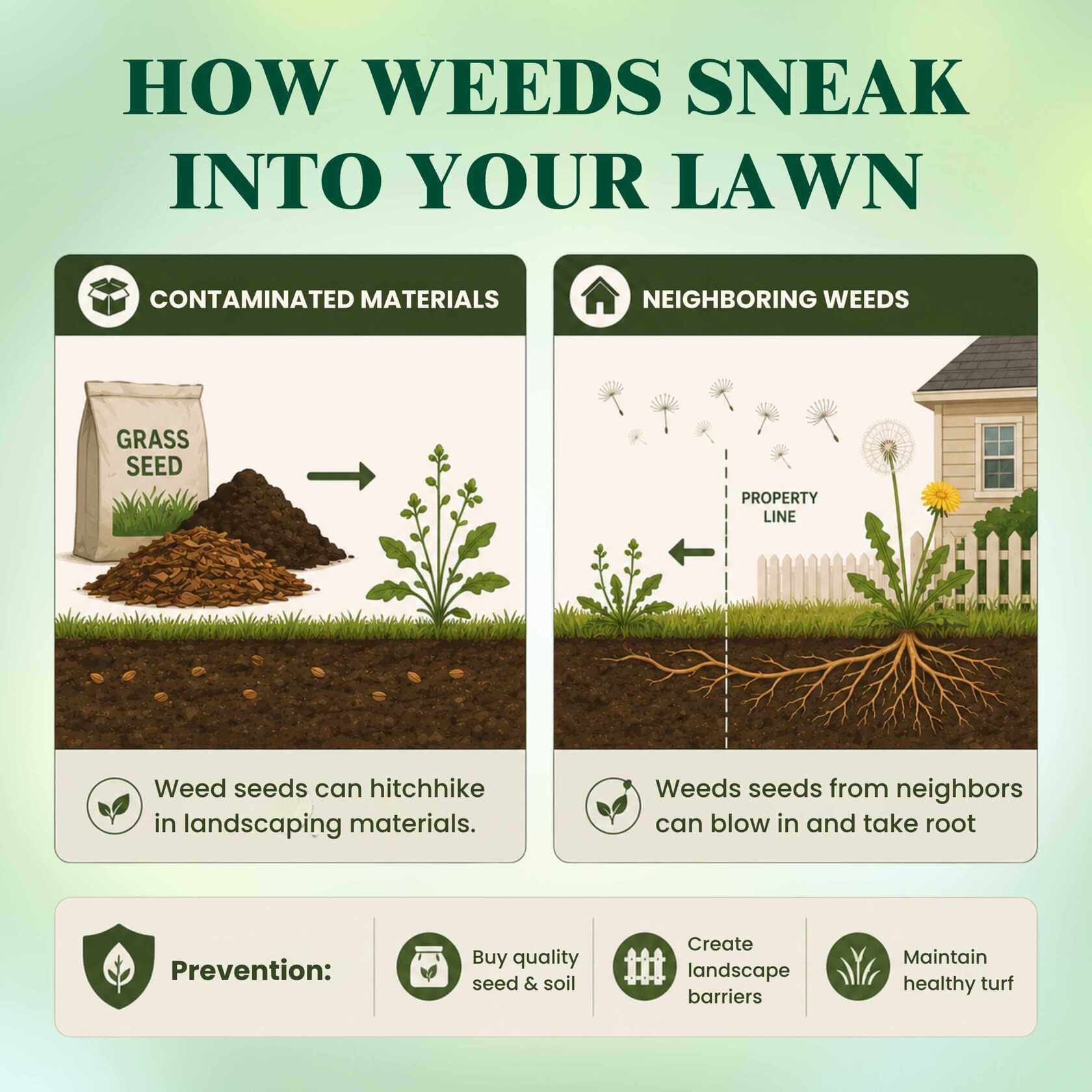
Grass seed mixes, topsoil, mulch — nearly any landscaping material you bring into the yard — may be contaminated with weed seeds.
For instance, if you filled a hole with new soil and then nutsedge started sprouting soon after, the soil may have been contaminated with nutsedge tubers.
Solution: Ensure you’re obtaining high-quality agricultural material. High-quality grass seed mixes should contain less than 0.3% of weed seed, ideally 0%.
13. Your Neighbor Has Weeds
Many weeds have an advanced spreading technique, especially dandelion. A neighboring lawn’s weeds may spread to your lawn via airborne seeds, creeping underground root systems, and being tracked by vehicles or foot traffic.
Solution: Create a barrier with gravel, mulch, or edging to block creeping weeds and practice a good weed control routine. Respectfully communicate with your neighbor and collaborate on how to reduce the weeds.
Frequently Asked Questions
Why Do Weeds Grow So Fast?
Weeds are competitive, opportunistic plants that thrive in harsh conditions. Their efficient root system helps them develop quickly, and their short life spans combined with large seed production requires rapid development.
Where Do Weeds Come From?
Weeds spread through airborne seeds, creeping root systems, and dormant underground seeds.
They can also be tracked in by foot traffic or vehicles, or introduced through contaminated materials like grass seed mixes, mulch, or topsoil.
Are Weeds Bad for the Lawn?
Whether weeds are “bad” for the lawn depends on your lawn goals. If your goal is to have a healthy, dense lawn, then weeds can weaken and thin the grass by absorbing sunlight, nutrients, and water.
If your goal is to have a pollinator-friendly lawn, weeds like clover and dandelion can be an early-spring food source for pollinators until more diverse and nutritious plants bloom.
How Do I Get Rid of Lawn Weeds?
You can get rid of lawn weeds by applying pre-emergent herbicides and post-emergent herbicides, hand pulling, digging, removing them with weed tools, and practicing a good lawn care routine.
Find a Lawn Care Pro Near You
Weeds are a universal challenge for homeowners across the country. Whether you're dealing with dandelions taking over a lawn in Columbus, OH or crabgrass creeping through a yard in Charlotte, NC, the frustration and lawn damage they cause are often the same. A local landscaping professional can help you identify what's driving your weed problem and build a treatment plan that keeps weeds at bay.