


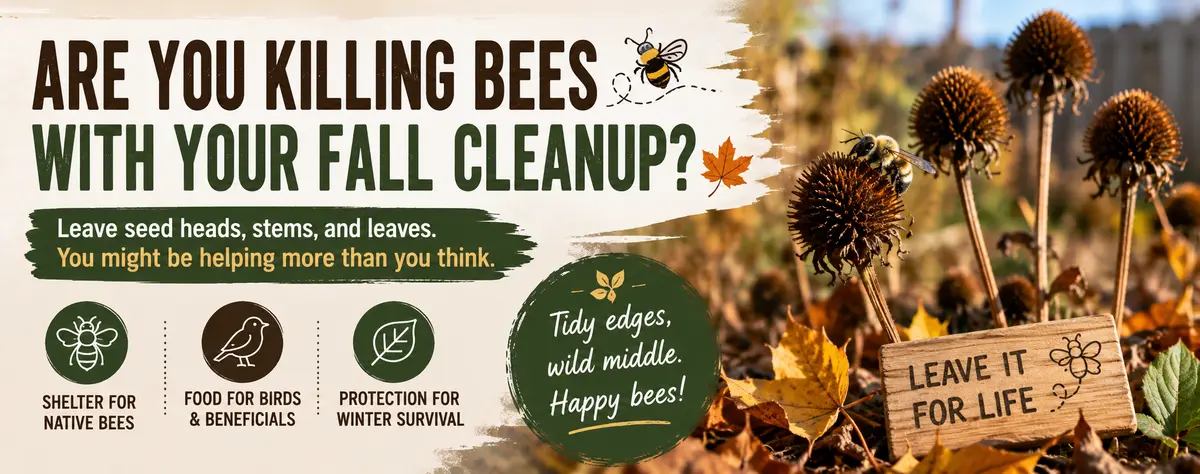
Are You Killing Bees With Your Fall Cleanup?
It sounds dramatic. But if you walk through your yard in fall and cut every dead flower head to the ground, you may be doing more damage than you think. Deadheading flowers in spring and summer makes sense. It keeps many plants blooming longer. It makes flower beds look clean. It can stop some plants from going to seed too early. But fall is different. In fall, your garden is no longer just a garden. It becomes a winter shelter. Those “ugly” stems, dried flowers, seed heads, and leaves can become food and cover for native bees, butterflies, birds, ladybugs, and other helpful insects. So yes, that clean fall flower bed may look nice. But it may also be a little too clean.
Should You Deadhead Flowers In The Fall?
Here’s the simple answer:
Do not deadhead every flower in the fall. Leave seed heads, hollow stems, and native perennials standing through winter whenever you can. That does not mean your yard has to look abandoned. It means you should clean up with a plan.
You can remove diseased plants. You can cut back messy annuals. You can clear walkways, patios, and the front edge of beds. But don’t scalp the whole garden. Many native bees, including small carpenter bees, use old pithy stems as nesting habitat and overwintering sites. Oregon State University Extension recommends leaving extra stem on plants like raspberries, elderberries, hydrangeas, coneflowers, sunflowers, and asters to create bee habitat for the next season. That dead-looking stem might be a nursery.
Why Fall Deadheading Hurts Bees
Most people think of bees as honey bees living in a hive.
But many of the bees in your yard are native solitary bees. They don’t live in big colonies. They don’t have a beekeeper watching over them. They survive by using what your yard gives them.
And in fall, they need three things:
1. Shelter
Some pollinators use hollow stems, plant debris, leaves, brush piles, and undisturbed garden beds to get through winter.
University of Illinois Extension notes that native bees like leafcutter and mason bees nest in stems, while some butterflies overwinter as pupae attached to dry stems. They also point out that many native bees nest in the ground, which is why leaving some bare soil matters too.
2. Food
Seed heads are not trash. Coneflowers, sunflowers, black-eyed Susans, asters, goldenrod, bee balm, and native grasses all offer late-season value. Some provide nectar before frost. Some produce seeds for birds. Some reseed naturally and give you more flowers next year. When you deadhead everything, you stop that cycle.
3. Protection
Leaves in garden beds act like a winter blanket. They protect insects, soil life, and plant roots. They also break down into natural organic matter. Now, here’s the catch. You don’t want heavy wet leaves smothering your turf. That can hurt the lawn.
So rake leaves off the grass and into flower beds, shrub borders, or a small brush pile. That keeps your lawn healthy while still helping pollinators. That’s good fall lawn care and good eco-friendly yard maintenance.
When Deadheading Still Makes Sense
Deadheading is not bad. Doing it at the wrong time, on the wrong plants, is the problem.
Deadheading flowers makes sense when:
- You want annuals to keep blooming in spring or summer
- A plant has powdery mildew, blight, or pest damage
- You need to stop an aggressive plant from spreading
- The plant is leaning into a walkway or driveway
- You want a cleaner front-yard look near the house
If a plant is diseased, remove it. Don’t leave infected plant material in the bed all winter. That can make next season’s problems worse. If a plant is invasive or spreads too fast in your area, remove the seed heads before they scatter. But for healthy native perennials Leave more than you cut.
The Best Fall Cleanup Method For Bees
Want the yard to look cared for without hurting pollinators? Use the “tidy edge, wild middle” method. Clean the front edge of the flower bed. Cut back anything flopping over the sidewalk. Remove weeds. Pull diseased annuals. Then leave the back of the bed more natural. Let seed heads stand. Leave sturdy stems. Tuck leaves under shrubs. Keep a few open patches of soil.
If you do cut stems, don’t cut them to the ground. NC State Extension found that trimming perennial stems in their first winter and leaving 12 to 24 inches of stubble can create nesting habitat for stem-nesting bees the following spring and summer. They also warn not to recut stems that were already cut or damaged earlier in the growing season, because bees may have moved in. That is the sweet spot. Neat enough for the neighbors. Useful enough for the bees.
Native Plants Deserve Special Treatment
Native plants are the backbone of a pollinator-friendly yard. Why? Because local bees, butterflies, and birds have adapted to them over time. Native asters, goldenrod, milkweed, coneflowers, bee balm, mountain mint, black-eyed Susans, and native grasses all bring more to the yard than color. They bring life. GreenPal’s own bee habitat article points out that leafcutter bees use decaying wood, gaps, beetle burrows, and hollow plant stems, and they need leaves or flower petals for nesting material along with pollen and nectar.
That means your “messy” fall garden may be doing real work.
If you want a more pollinator-friendly landscape, plant more native perennials and stop treating fall cleanup like a demolition job.
What About The Lawn?
Your grass still needs attention in fall.
Fall lawn care usually includes final mowing, leaf cleanup, overseeding, aeration, and prepping the lawn for winter, which is why many homeowners book lawn care in Nashville before the first hard freeze. GreenPal’s seasonal lawn care content also points to fall services like overseeding, dethatching, leaf cleanup, and final mowing as key parts of getting the yard ready for cold weather.
- The trick is balance, especially when you are deciding between spring and fall yard work, like which lawn care services matter most by season.
- Don’t leave thick leaf mats on the lawn.
- Do move leaves into beds.
- Don’t scalp the grass.
- Do keep it at a healthy height going into winter.
- Don’t spray pesticides “just because.”
- Do look for safer, targeted options when pests show up.
- This is where a local lawn care pro can help.
If you book seasonal lawn care through GreenPal, you can ask for a fall cleanup that protects pollinators. Tell your lawn pro to remove leaves from the turf, leave selected flower stems standing, and avoid cutting native perennials to the ground.
GreenPal connects homeowners with local lawn care providers, lets them compare bids and reviews, and is free for homeowners to use.
The Bottom Line On Fall Deadheading
Deadheading flowers in fall is not always wrong. But deadheading everything is. Your fall garden is full of seed, shelter, and future pollinators, especially if you are trying to create a better bee habitat in your yard. Before you cut it all down, slow down and look closer. Leave the coneflowers. Leave some stems. Move leaves into beds. Cut only what is diseased, invasive, unsafe, or truly in the way. You will still have a cared-for yard. And next spring, you may have more bees, more blooms, better soil, and a healthier outdoor space because of it.
Need help keeping the lawn clean without wiping out your garden habitat? GreenPal can help you find local lawn care pros who can handle fall cleanup the smarter way.


