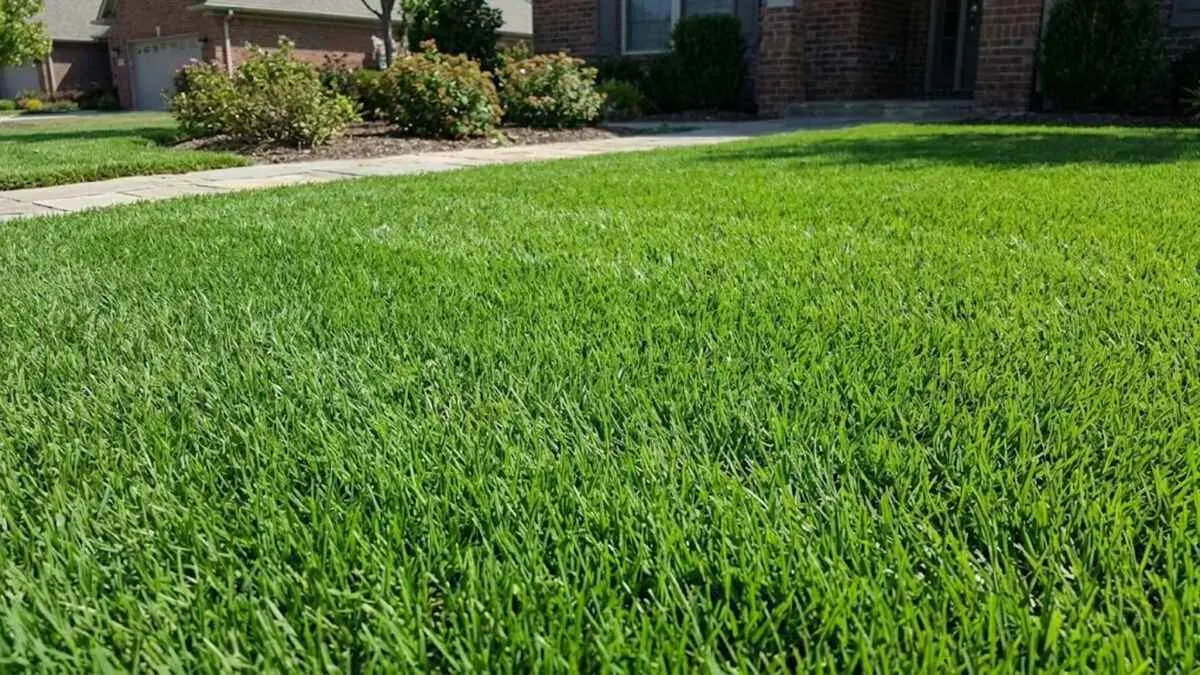
Zoysiagrass is a slow-growing warm-season grass, generally requiring less mowing and fertilizer than bermudagrass. In this lawn care calendar, we’ll show you how to maintain zoysiagrass month by month.
Similar to other warm-season grasses, zoysiagrass requires the most care in late spring and early summer when it’s actively growing. Slap on some sunscreen and let’s get started.
Spring: March, April, May
Although zoysiagrass is wear resistant, it recovers slowly from injury. Perform invasive treatments, like aeration and dethatching, in late spring or early summer so that the grass has enough time to recover for the remainder of the growing season.
Remove Dead Tissue
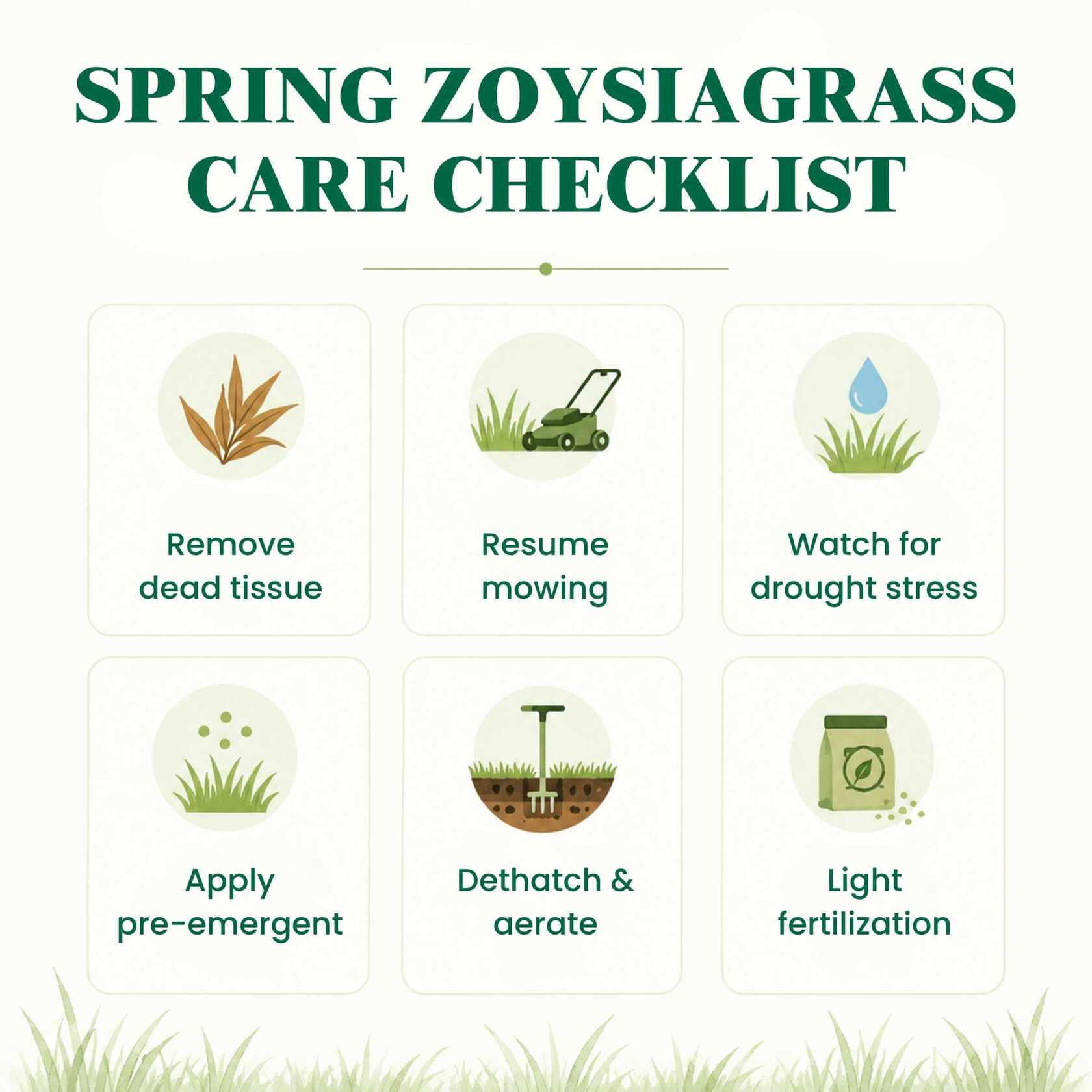
As soon as new growth emerges (around mid-spring), you may mow or gently rake the lawn to remove excess dead tissue. This method reduces shade, shines more light on new growth, and increases soil temperatures.
Mowing
After spring greenup, it’s time to adopt a regular mowing schedule. Zoysiagrass prefers mowing heights between 1 to 2 inches.
To avoid removing more than one-third of the grass blade at once — which is stressful for grass — mow zoysiagrass once it reaches between 1.5 to 3 inches tall.
Note: In partial shade, mow zoysiagrass down to 2 to 2.5 inches.
Irrigation
Spring usually provides enough rainfall for zoysiagrass. During dry spells, provide supplemental irrigation when your grass shows signs of thirst, such as:
Grass turns bluish-gray or yellow
Lingering footprints
Wilted or curly blades
Slower growth
Dry, cracked, or hard soil
Yellow or shriveled crowns
Bare spots
Brittle grass
Weed Control
One of the most effective ways to reduce lawn weeds is to maintain a healthy, vigorous lawn. However, when weeds keep coming back despite your best efforts, a pre-emergent herbicide can offer an extra boost of protection.
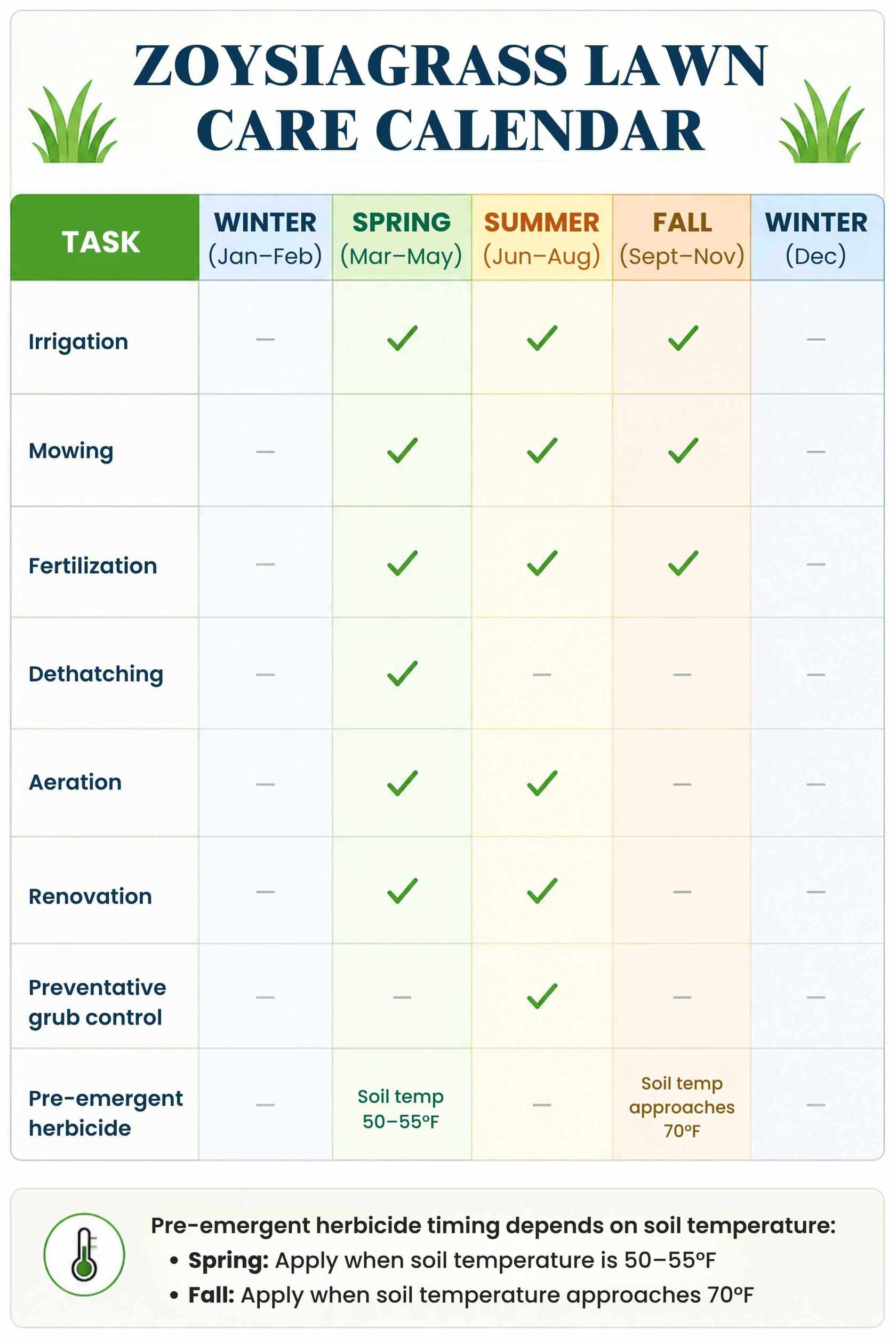
Apply pre-emergent in early to mid-spring when soil temperatures are consistently between 50 and 55°F.
Note: Pre-emergent herbicide can prevent grass seeds from germinating. Most pre-emergent herbicides require waiting 8 to 12 weeks or longer before planting new grass seed. Always check the product label, as some herbicides (like prodiamine) may require up to 16 weeks.
Learn More: When to Apply Pre-Emergent Herbicide
Monitor for Disease
Large patch is a common fungal disease affecting zoysiagrass lawns in spring and fall. Symptoms appear as large, brown, circular patches of grass up to several feet in diameter.
To control large patch, cultural practices are the foundation of long-term management. Here’s how:
Improve drainage
Reduce irrigation
Reduce nitrogen fertilization
Increase air movement
For lawns with a recurring history of large patch, preventative fungicide applications in fall can also help.
Dollar spot is another common fungal disease in zoysiagrass. Symptoms appear in spring or fall as small, straw-colored spots in the lawn, though these spots can merge together to form larger patches in taller mowed grass. Web-like mycelium (fungal growth) may be visible on the grass blades in the early morning.
Nitrogen fertilization is the most effective tool for both preventing and managing dollar spot. Watering in the early morning and keeping thatch under control can also help reduce conditions favorable to the disease.
Thatch Removal
The best time to dethatch zoysiagrass is between late spring through early summer.
Thatch exceeding one-half inch thick prevents water, nutrients, and oxygen from reaching the soil surface, and ought to be removed.
Remember, zoysiagrass recovers slowly. If thatch is more than one inch thick, the University of Missouri Extension recommends dethatching over a period of two or three years rather than all at once.
Note: If aerating and dethatching in the same season, dethatch before aeration. Keep in mind that dethatching can disrupt the chemical barrier created by pre-emergent herbicide.
Learn More: Why, When, and How to Dethatch Your Lawn
Aeration
The best time to aerate zoysiagrass lawns is between late spring and early summer. Waiting to aerate until mid- to late summer may not give your lawn enough time to heal.
Notes on timing aeration:
If dethatching and aerating in the same season, aerate after dethatching.
Followup aeration with fertilizer, if necessary.
Similar to dethatching, aeration can disrupt pre-emergent herbicide’s chemical barrier.
Learn More: Why, When, and How to Aerate Your Lawn
Renovation
Zoysiagrass establishes slowly from seed, so the best way to repair large bare patches is with plugs or sod in late spring or early summer.
Because it spreads through stolons and rhizomes, zoysiagrass can gradually fill in small areas on its own. If you choose to overseed small areas, use a seeded variety like Zenith and plant it in late spring or early summer.
Fertilization
Always apply fertilizer and soil amendments, such as lime or sulfur, based on the recommendations of a soil test.
In general, zoysiagrass can benefit from one-half pound of nitrogen per 1,000 square feet approximately three weeks after greenup.
Note: Do not apply more than 2 lbs of nitrogen per 1,000 square feet per year.
Summer: June, July, August
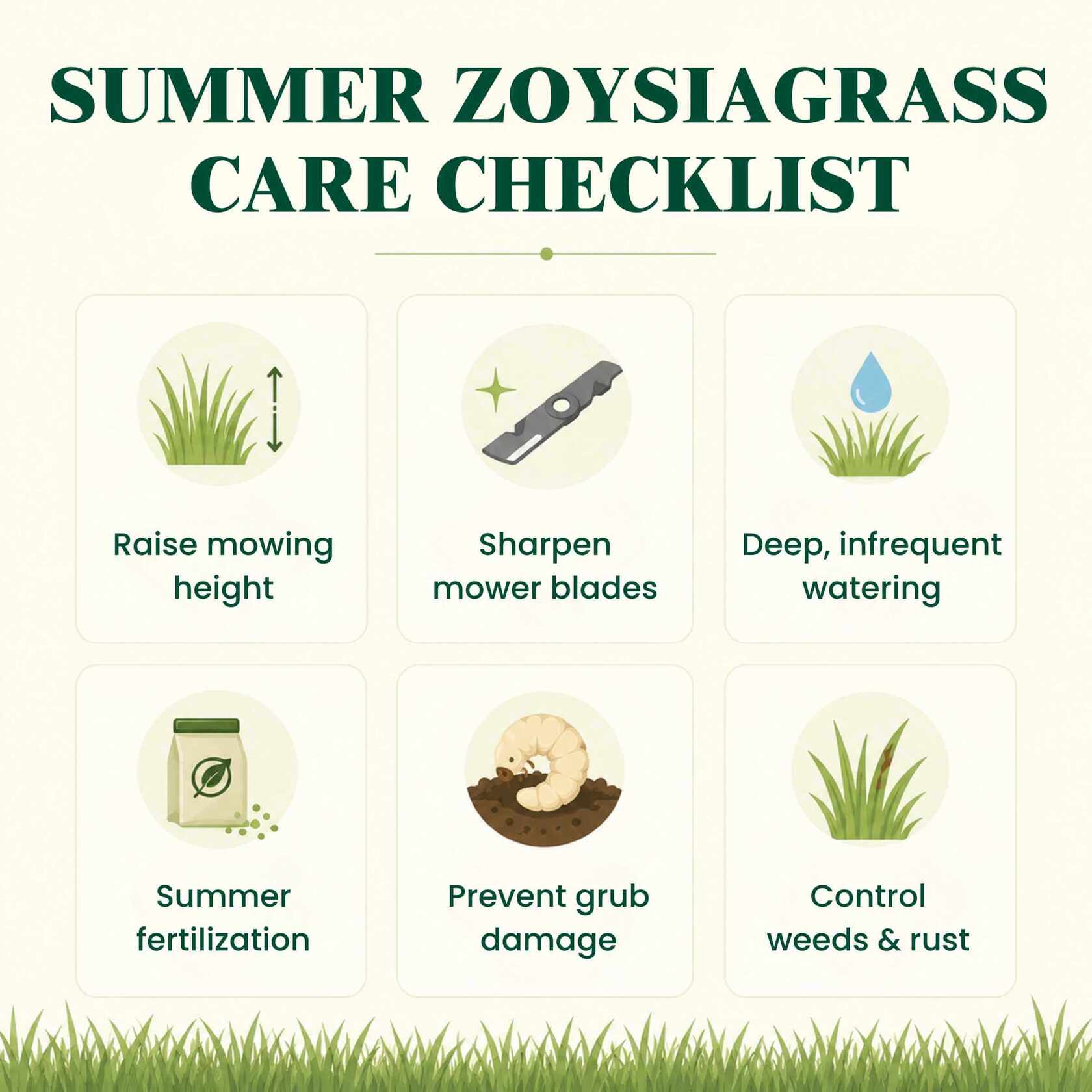
If you missed the late spring window for aeration and dethatching, wrap up those tasks in early summer.
With summer comes increased irrigation and mowing frequency, weed and disease control, and fertilizer applications.
Raise the Mowing Height
Tall grass in summer shades the roots and cools soil temperatures, protecting your lawn from drought stress.
If you haven’t been mowing high already, raise the mower blades to the higher end of zoysiagrass’ preferred mowing height.
Sharpen Mower Blades
Zoysiagrass is stiff and can quickly dull lawn mower blades. Keep your mowing blades sharp to ensure a crisp, healthy cut. Dull blades rip and tear the grass, making it vulnerable to stress and disease.
Learn More: How to Sharpen a Lawn Mower Blade
Irrigation
Zoysiagrass needs 0.5 to 1 inch of water per week during the active growing season.
The key to establishing a healthy and deep root system is to water deeply and infrequently — about 1 to 3 times per week. Watering too frequently and for short periods encourages a weak and shallow root system.
Learn More: How to Water Your Lawn: Tips & Schedule
Fertilization
Fertilizer amounts and timing should be based on the results of a soil test.
Zoysiagrass lawns generally benefit from two fertilizer applications in summer: 0.5 to 0.75 pounds of nitrogen per thousand square feet in late June or early July and again in mid-August. Do not apply more than 2 lbs of nitrogen per 1,000 square feet per year.
Pest Control
If your zoysiagrass lawn has a recent history of white grub infestations, a preventative insecticide can help minimize grub damage this fall. The best time to apply preventative insecticides is generally June or July, before the eggs hatch in mid-to-late July.
Read the product’s instructions for recommended timing, as the application window can vary depending on the active ingredient.
Weed Control
If weeds begin to pepper your zoysiagrass lawn, control summer weeds with post-emergent herbicides, hand-pulling, digging, or homemade weed killers.
Learn More:
Disease Control
If your shoes are covered in orange dust after a stroll through the yard, your zoysiagrass may be suffering from rust. Rust can affect zoysiagrass lawns summer through early fall and often signals nutrient-deficient turf.
Too much shade, high humidity, poor air circulation, and extended moisture also contribute to rusts' development. Increasing nitrogen fertilizer can help reduce rust, though improving air circulation and avoiding evening irrigation can also help limit conditions favorable to the disease.
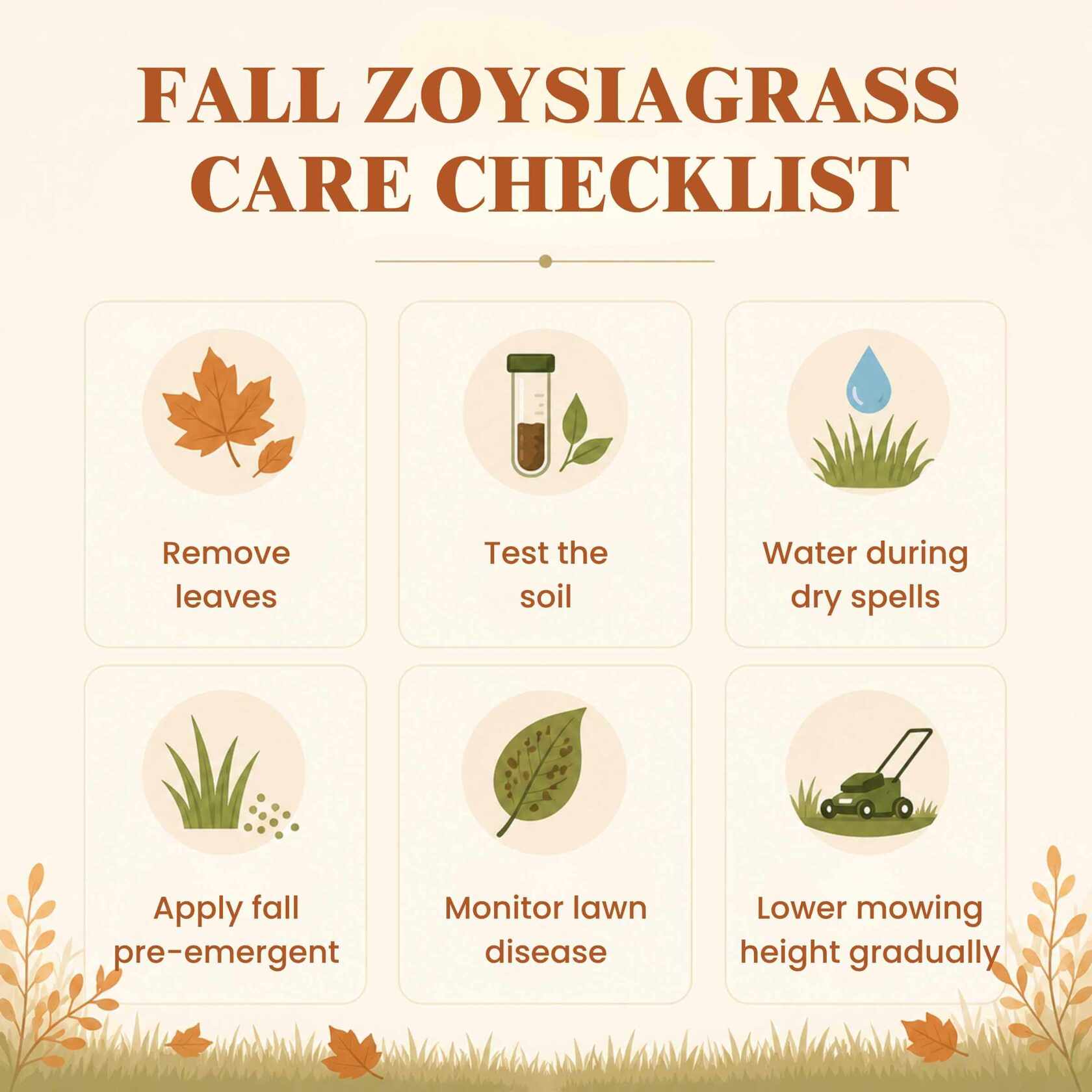
Fall: September, October, November
As temperatures start to drop, so do your maintenance tasks. Mowing slows down, and you won’t need to dethatch or aerate.
Do not fertilize zoysiagrass in fall. You will, however, need to grab your leaf rake.
Rake Leaves
Fall brings cozy sweaters, warm drinks, and yards full of leaves. While these leaves may look beautiful on the lawn, they can be harmful for the turf.
Too many leaves can suffocate the grass and block sunlight. They may also spread diseases and pests, especially when wet.
Leaf removal methods include raking, leaf blowing, mulch mowing, or professional leaf removal services.
Test the Soil
If you haven’t tested your soil recently, early fall is the best time to do it.
Send a soil sample to your local cooperative extension for laboratory testing and receive detailed information about your soil’s health. A soil test also provides recommended fertilizer and soil amendment rates.
Zoysiagrass tolerates a soil pH range between 6.0 and 7.0. A soil test may recommend an application of lime or sulfur if the pH level needs to be adjusted.
Irrigation
Like spring, fall typically provides enough rain for most lawns. When your lawn shows signs of thirst, provide it with supplemental irrigation.
Weed Control
If your lawn has a history of winter weeds (or dandelions blooming in spring), preventative herbicides can help block their growth.
If needed, apply pre-emergent herbicides in early to mid-fall when soil temperatures drop and begin approaching 70°F.
Disease Control
Monitor your lawn for symptoms of large patch and dollar spot.
For zoysiagrass lawns with a history of large patch, fall is the optimal window for preventative fungicide treatment (when soil temperatures drop toward 70°F). If cultural practices alone are not keeping these diseases at bay, consult your local extension service for chemical treatment recommendations.
If you live in an area with intense heat, extreme humidity, and frequent rainfall (such as Atlanta, GA or Mobile, AL), your zoysiagrass lawn may be more susceptible to lawn disease. Consider hiring a local landscaping professional to keep your lawn healthy and resilient against disease, lowering the need for chemical treatments.
Lower the Mowing Height
As fall comes to a close, gradually lower the lawn’s mowing height to 1 inch over several mows. Short grass survives the winter better than tall grass, and is less susceptible to matting and snow molds.
Remember, do not remove more than one-third of the grass blade’s height in a single mow.
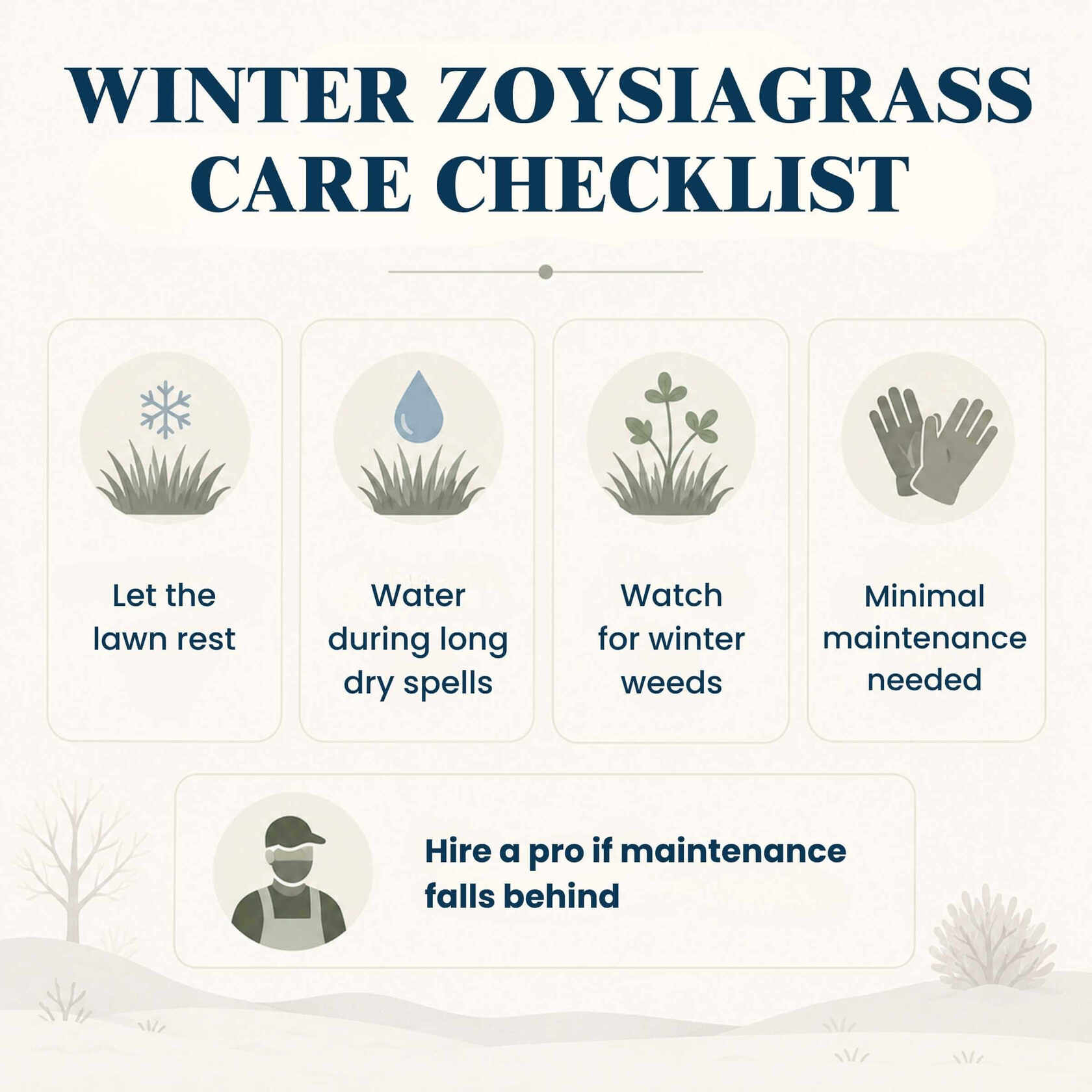
Winter: December, January, February
Your lawn needs a break in winter, and so do you! Your only tasks this season are to monitor for drought stress and weeds.
Irrigation
Winter rain and snow typically provides lawns with enough irrigation to survive the season. However, if there hasn’t been precipitation in 3 to 4 weeks, apply 0.25 to 0.5 inches of water when the soil is not frozen.
Weed Control
If winter weeds, such as chickweed or henbit, invade your lawn, you can hand-pull them, dig them out, or apply a post-emergent herbicide.
Keep It Simple: Hire a Pro
Zoysiagrass rewards patient homeowners with a dense, wear-resistant lawn that typically demands less mowing and fertilization than bermudagrass. That said, staying on top of seasonal tasks is key to keeping it healthy year-round.
If life gets busy and your lawn care calendar starts slipping, consider hiring a local lawn care professional to help. With zoysiagrass's slow recovery rate, falling behind on maintenance is much easier to prevent than it is to fix.